En
En 
Introduction
A guide for teachers and pupils: how to form a school robotics team, which robot to start with and how to prepare for the line following, zigzag and labyrinth tasks at the Georgian Robotics Association's school competitions.
Why robotics at school
Robotics brings physics, mathematics, programming and teamwork together in one task — exactly what STEM and STEAM education is about. Pupils see how the code they write behaves in the real world, and find and fix their mistakes right away.
The Georgian Robotics Association has run school competitions since 2022: teams from public and private schools compete on a straight line, a zigzag and a labyrinth.
How to form a team
- At our competitions a team usually has 2–5 pupils — in past years from grades 9–12; the current rules are on the competition page;
- A school can enter several teams;
- A teacher or mentor helps a lot with the preparation;
- Roles: who builds the robot, who writes the program, who measures and checks the results.
Which robot to start with
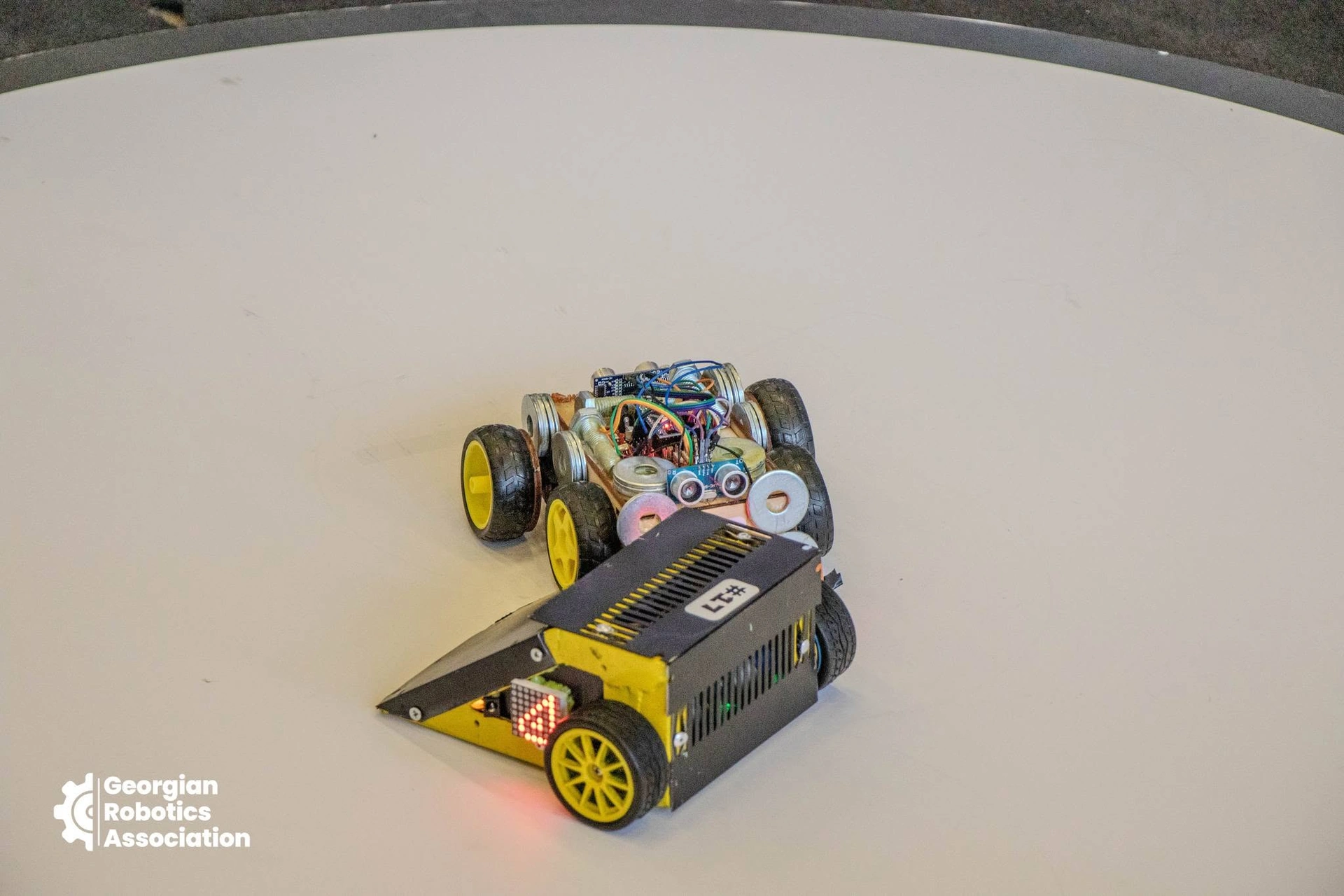
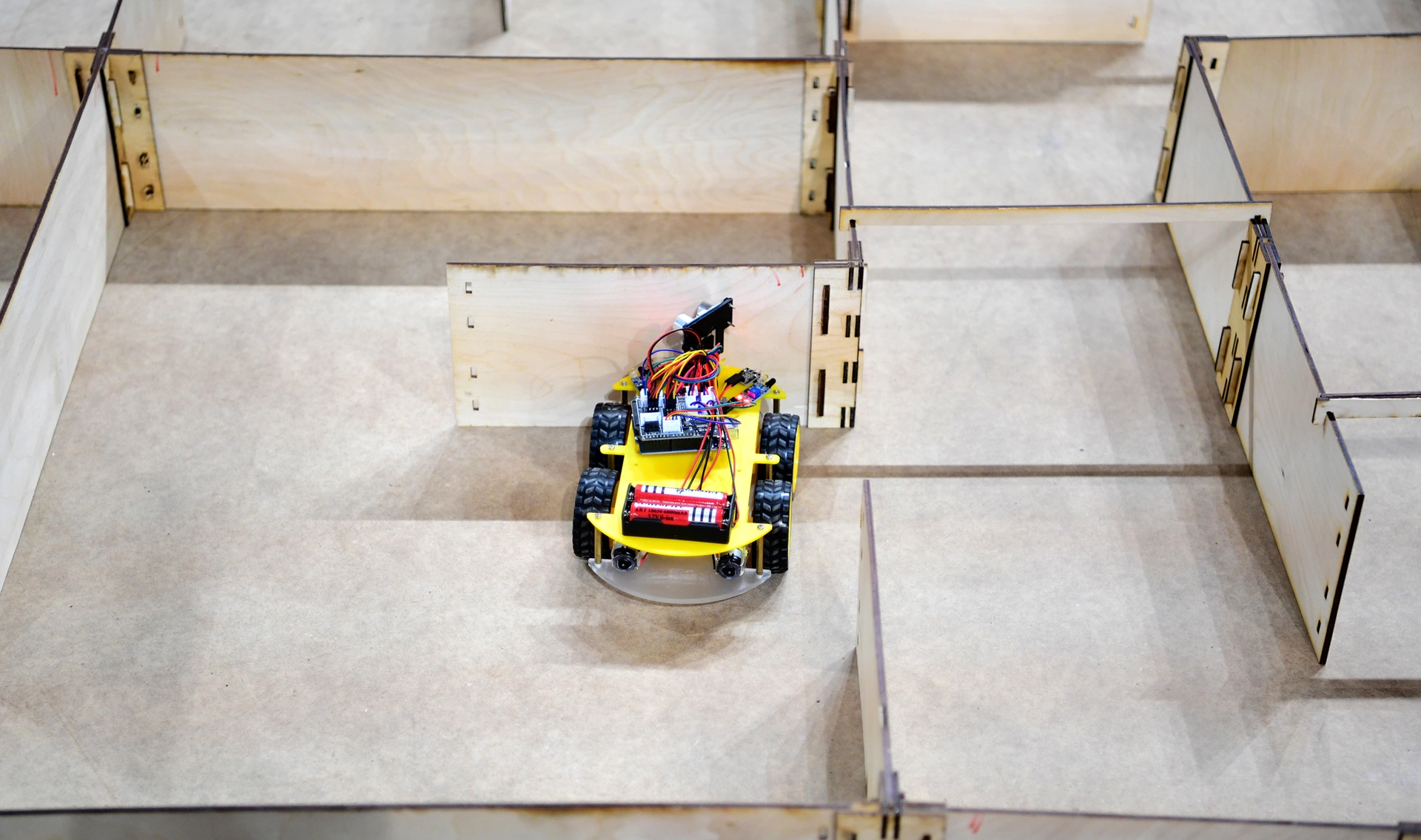
At our first competitions teams used two kinds of robots — mBot and 4WD Smart Robot Car. Both are educational kits with motors, (infrared) line sensors and an ultrasonic distance sensor — enough for all three tasks. What matters is that one robot completes all three.
The three tasks and how to prepare
- Straight line — speed and stability: the robot has to reach the finish straight. Balance the motor speeds so it doesn't drift to one side;
- Zigzag (line following) — the robot follows a black line with its line sensors without skipping any segment. Start with simple on/off logic, then try proportional (P or PID) control — the robot will run faster and smoother;
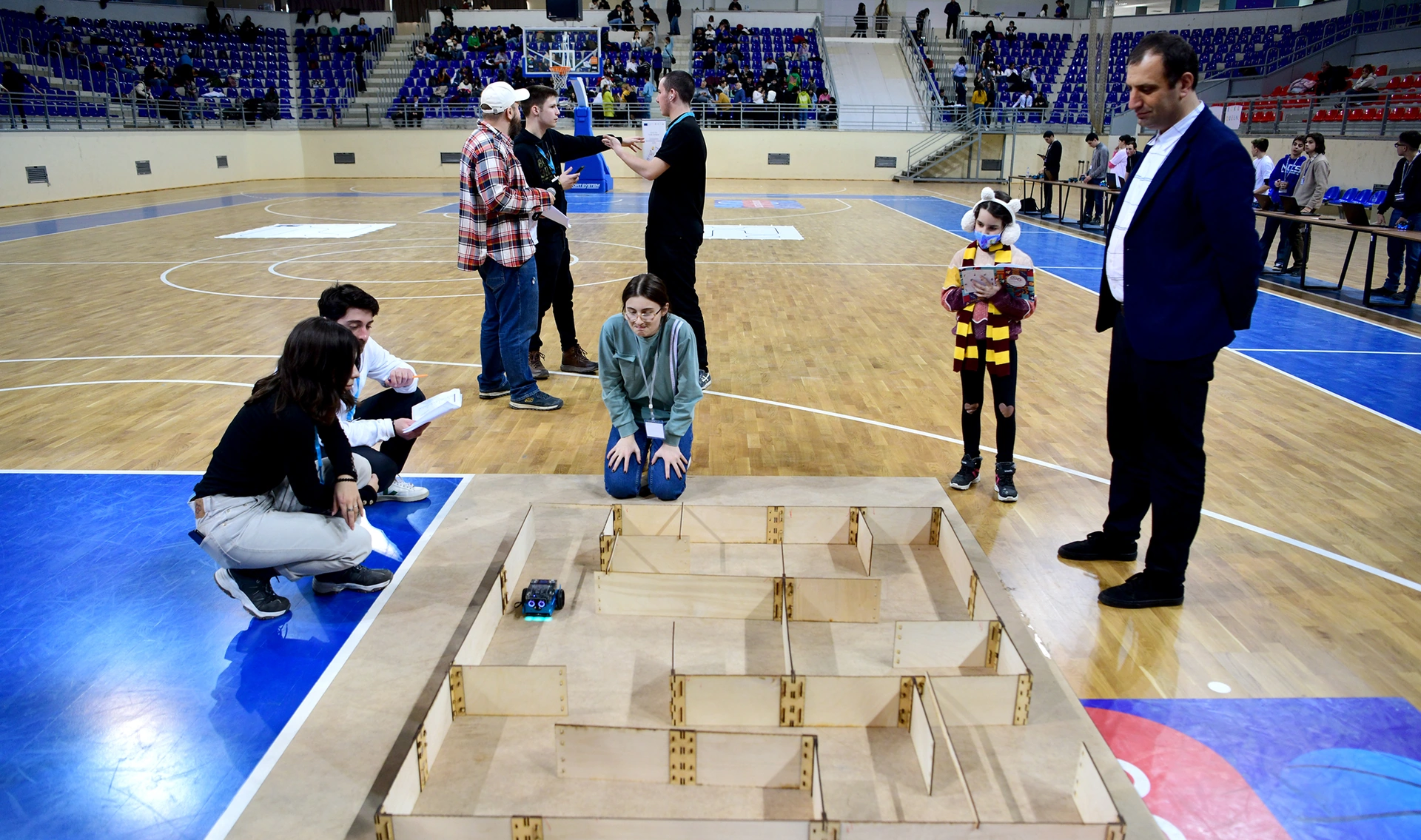
- Labyrinth — the robot has to find the exit in the shortest time. A simple, reliable method is wall following (for example, always the right-hand wall) with the ultrasonic sensor.
Practise on tracks drawn on paper or plywood, and write down the time of every run.
The next step
Current school competition and registration: School Robotics Competition. For older pupils and students — SUMO and Line Follower, and for school STEAM projects — the STEAM Project Competition. Every association championship — in our history.