En
En 
Introduction
What a SUMO robot competition is
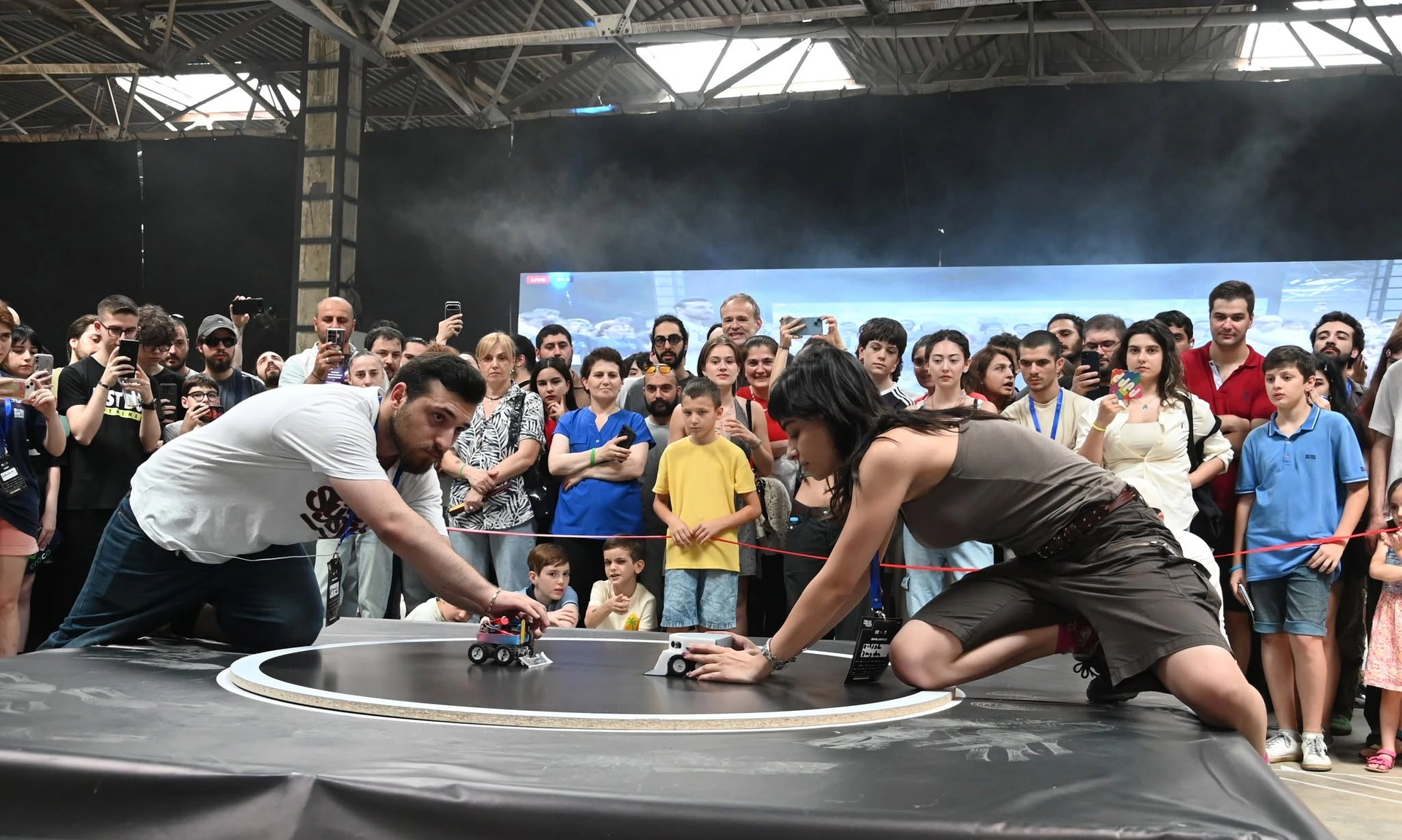
In a SUMO robot competition two robots try to push each other out of a round ring — just like sumo wrestlers. At the Georgian Robotics Association's championships SUMO robots are autonomous: once the match starts nobody controls them — the robot finds its opponent with its sensors and decides on its own when to attack.
That makes SUMO a test of mechanics, electronics and programming at once — and one of the best ways to learn robotics.
Classes at our championships
Classes and age limits may change from year to year — the exact rules are always on the competition page. For example, the SUMO tournament of ROBO BATTLE 2025 had two classes:
- up to 0.5 kg — the robot must fit in a 15×15 cm box;
- 0.5–3 kg — the robot must fit in a 25×25 cm box.
At the 2024 Robo Festival SUMO was open from age 16, in 2025 from age 14; school and student teams were welcome.
What you need for your first SUMO robot
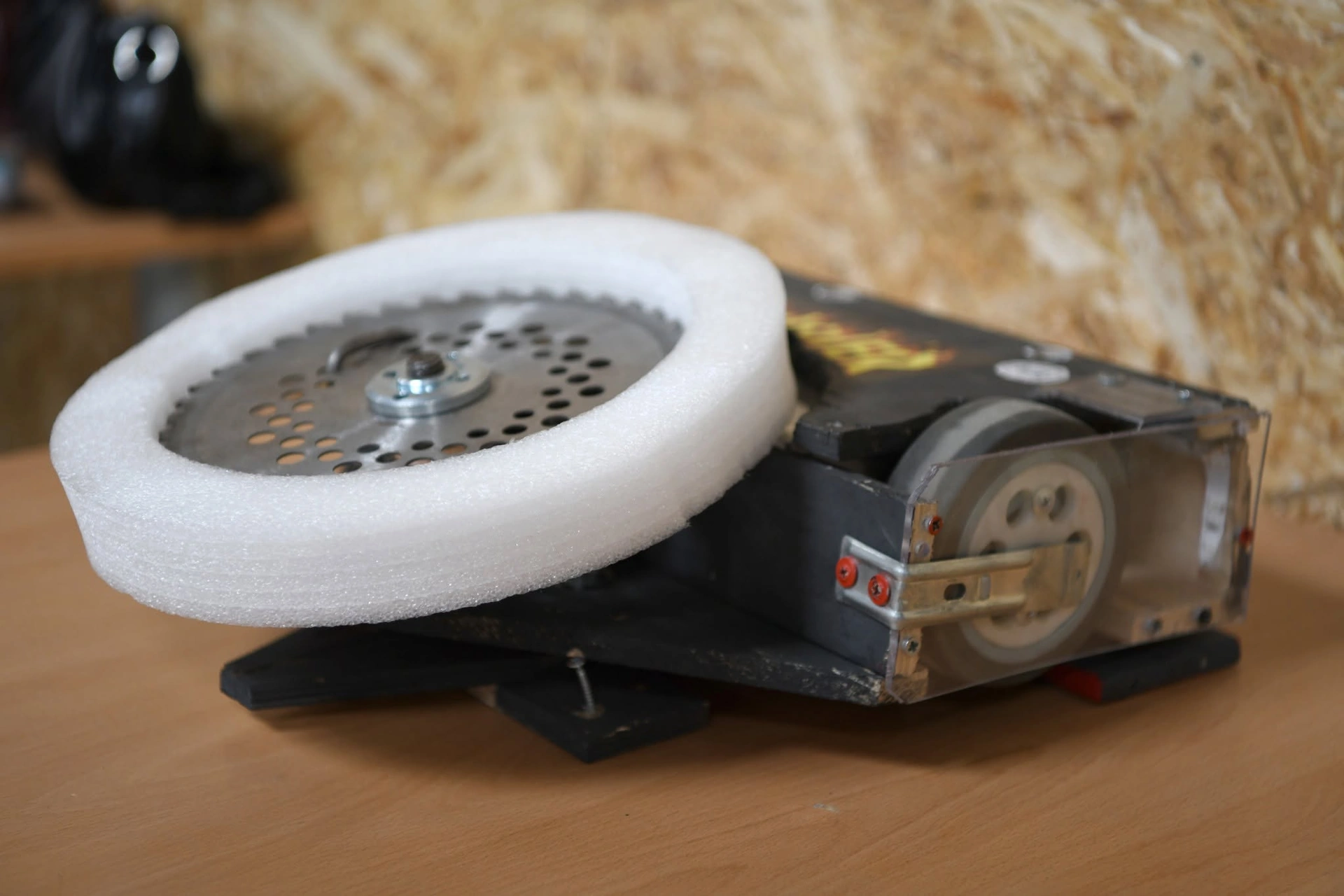
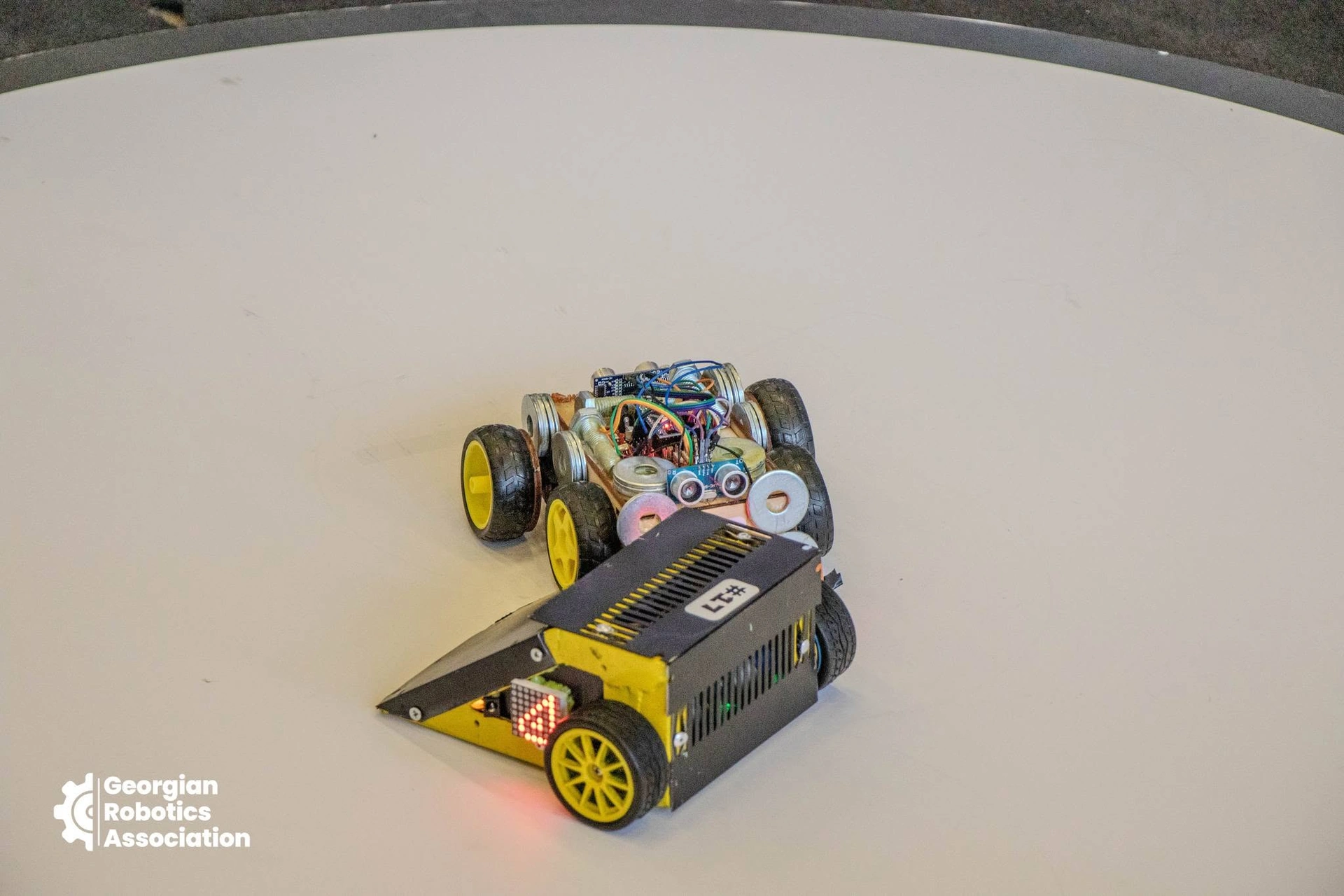
- Chassis and motors — a solid, low body and two or four motors with enough push; the lower the centre of gravity, the harder the robot is to flip;
- Motor driver and microcontroller — for example an Arduino-type board that reads the sensors and drives the motors;
- Opponent sensors — distance sensors (infrared or ultrasonic) so the robot can find its opponent;
- Edge sensors — line sensors that detect the ring's edge so the robot doesn't drive out on its own;
- Power — a battery that lasts the whole match;
- The program — search for the opponent, attack, and avoid the edge.
Tips for beginners
- Start simple: first make the robot detect the ring's edge reliably, then the opponent;
- Test a lot, under different lighting and on different surfaces;
- Split the roles in your team: mechanics, electronics, programming;
- Look at the photos and videos from our championships — you will find plenty of ideas there.
Current championship and registration: SUMO and Line Follower. Every association championship — in our history.