En
En 
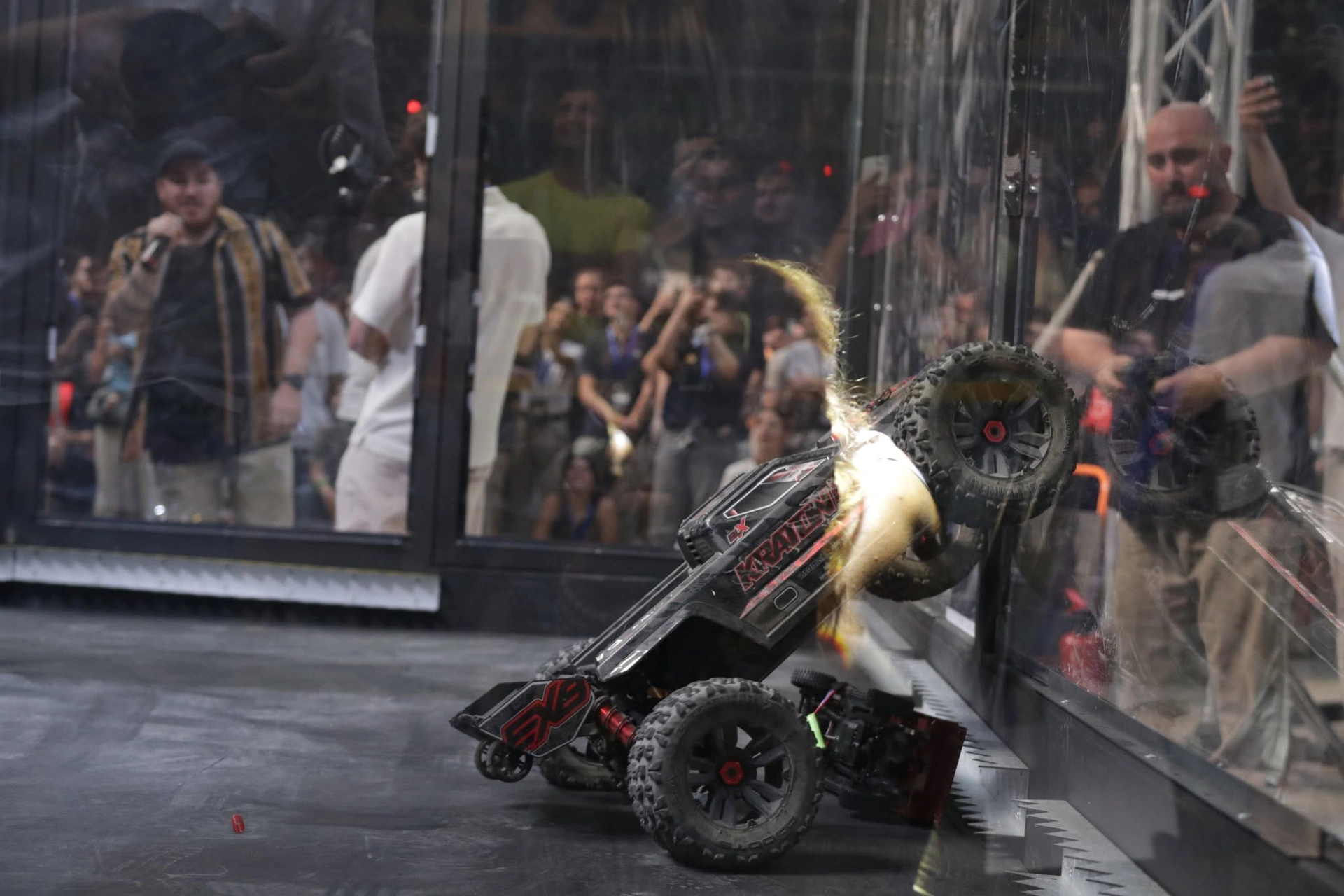
ROBO BATTLE 2026: the combat robot championship in Georgia
ROBO BATTLE is the combat robot championship of the Georgian Robotics Association (GRA): teams design and build remote-controlled robots, and two at a time fight each other in a closed arena. The association's first such championship — robot battles in Tbilisi — took place on 26 July 2025, and ROBO BATTLE 2026 goes international for the first time: teams from every country can take part.
This guide is for teams and spectators alike. The key facts:
- Dates: 21–28 November 2026, as the championship page shows; the organisers announce the exact format and daily schedule to the teams and on the page.
- Venue: announced on the championship page.
- Teams: 2–5 members aged 16 and over; a team with a minor needs at least one member aged 18+ and a parent's consent form.
- Registration: closed on 10 October 2026.
Everything below follows GRA's 2026 rules. Rules can change: each championship publishes the current version on its page, so check the details there.
The five weight classes and the fees
ROBO BATTLE 2026 has five weight classes; the fee is paid per robot in each class (the chart shows the limits to scale, the pilot classes dashed):
- Antweight — up to 500 g, 50 GEL, pilot class.
- Beetleweight — up to 1.5 kg, 50 GEL.
- Hobbyweight — up to 5.4 kg, 50 GEL.
- Featherweight — up to 13.6 kg, 50 GEL.
- Lightweight — up to 27 kg, 100 GEL, pilot class.
Pilot means a trial format: whether Antweight and Lightweight finally run depends on the number of registered teams and technically ready robots. A team may enter several classes; after the registration deadline the fee is not refunded.
The official weigh-in takes place a few days before the event, and an overweight robot gets only limited time to fix it. Covers removed at the arena entrance and small on-board cameras do not count; decorations up to 1 kg do not count either, under strict conditions.
The road to battle day
The championship starts long before the battle days; the rules set out the way there in stages (the timeline):
- Registration — an application form about the team and its experience; it closed on 10 October. Applications are reviewed, and the teams going through to the next stage are told by e-mail (the envelope on the timeline).
- Sketch and description — teams then receive a form: a sketch of the prototype, its exact dimensions and materials, a short description of the team, a group photo and the signed participation and liability form. Progress, creativity and fighting potential are assessed.
- Interim technical review — the build progress is checked.
- Tech Check, a week before the event — the final technical and safety inspection: weight, control, failsafe, the active weapon, the weapon lock, the power system and the other safety requirements. By then the robot must be completely ready.
- Battle days — 21–28 November.
Because the battle is planned for late November, the rules move these deadlines closer to it — follow the organisers' e-mails for the exact dates. A tip: have a robot that drives by the interim review, and spend the remaining weeks on the weapon, tests and identical spare parts.
Tech Check: what the inspectors look at
The full checklist is in How to build a combat robot; these are the points of GRA's 2026 rules that teams most often underestimate:
- Failsafe is tested. If the signal is lost, the transmitter is switched off or the control system loses power, the drive and every active weapon must stop by themselves. Setting it up: Radio control for robots.
- Switches and lights. Two main switches — drive and weapons — reachable without lifting the robot or touching the weapon; a kill switch away from the weapon (if it is underneath, bring a tool to turn the robot over without touching it); indicator lights that come on with the main switch.
- Timing. Switching on and switching off take at most 30 seconds each; in the arena a team has 30–60 seconds to remove locks and covers and switch on, while the robot stays still.
- Power. At most 60 V; the battery fixed and protected from impact, puncture and short circuits, and taken out after every match.
- Radio. Your system must not interfere with other teams' systems; one or two members drive — for example, one the robot, one the weapon.
- Weapons. Spinning weapons stop within 60 seconds, and no external part moves faster than 300 km/h. Glue, nets, liquids, smoke, devices that attack electronics (EMP) and lights or lasers that endanger eyesight are banned.
Robots move on the organiser's trolley, never by hand, with the weapon locked.
How a fight is won
Two robots fight at a time, for 3 minutes. A fight can end early:
- Immobilised robot: if a robot cannot move or act, a 10-second count starts; if it does not recover, it counts as disabled and the opponent wins.
- Tap out: a team's driver may concede at any moment, and the opponent wins at once.
- No working weapon: such a robot is disqualified automatically — which is why the rules advise a spare, modular weapon.
Grabbing, blocking or pinning an opponent is allowed for 20–30 seconds at most; pinning it for long to run down the clock counts as unfair tactics.
If neither robot is disabled after 3 minutes, the jury picks the winner on three criteria:
- Damage — how well the robot survives: how little damage it takes and how well it keeps its original shape; self-inflicted damage counts too.
- Attack — how often and how hard it attacks the opponent on purpose with its main weapon; attacking only with armour or a passive weapon scores lower.
- Control — how well the robot controls its own systems and weapons, and how well its functions work.
The organisers may stop a fight for safety or technical reasons. The lesson: drive actively, use the weapon, practise switching on fast.
For spectators: what you will see
The rules welcome spectators. ROBO BATTLE is a competition and a technology event at once: it aims for active, entertaining fights, and the robots may be filmed for television. What to expect:
- The arena. Fights take place in a closed arena; robots are switched on once they are placed in it and made safe before they leave. Stay behind the barriers and follow the staff.
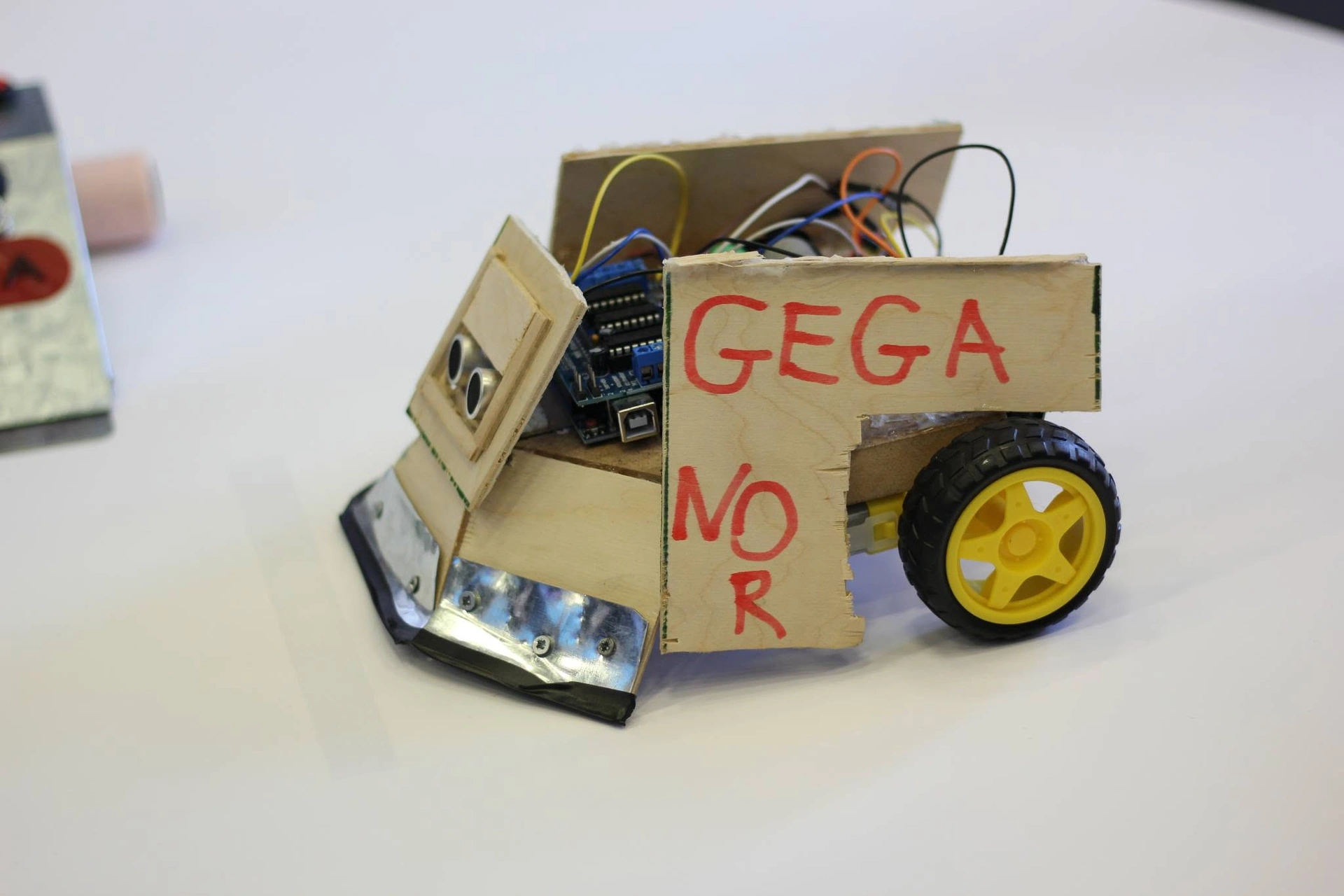
- The designs. Wedges, lifters, flippers, spinners and drums — the guide Designing a combat robot explains every type.
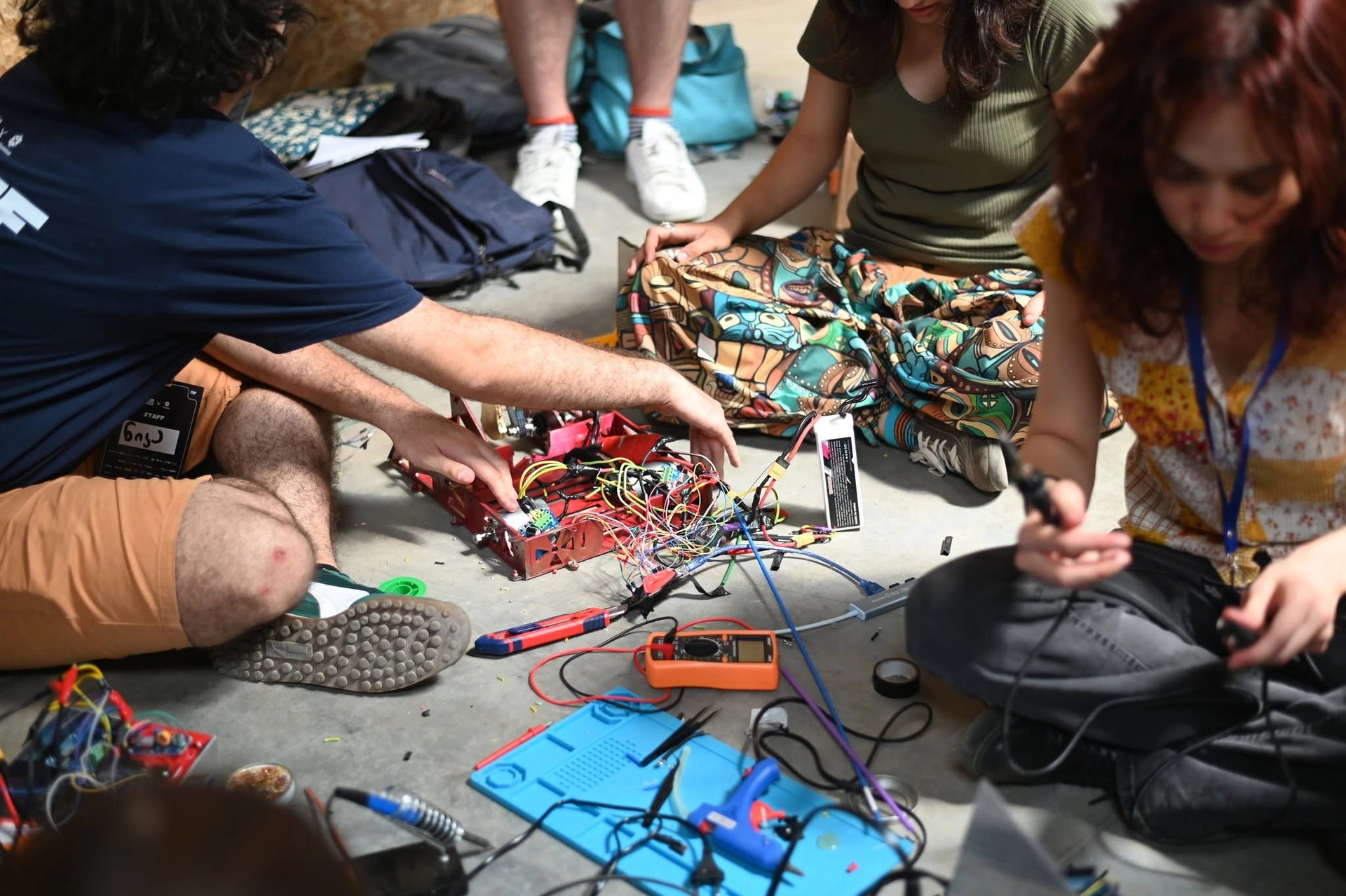
- The pits. Between fights teams repair their robots against the clock. Ask the team before you come close, never touch a robot and keep children next to you: even a robot standing still carries a charged battery.
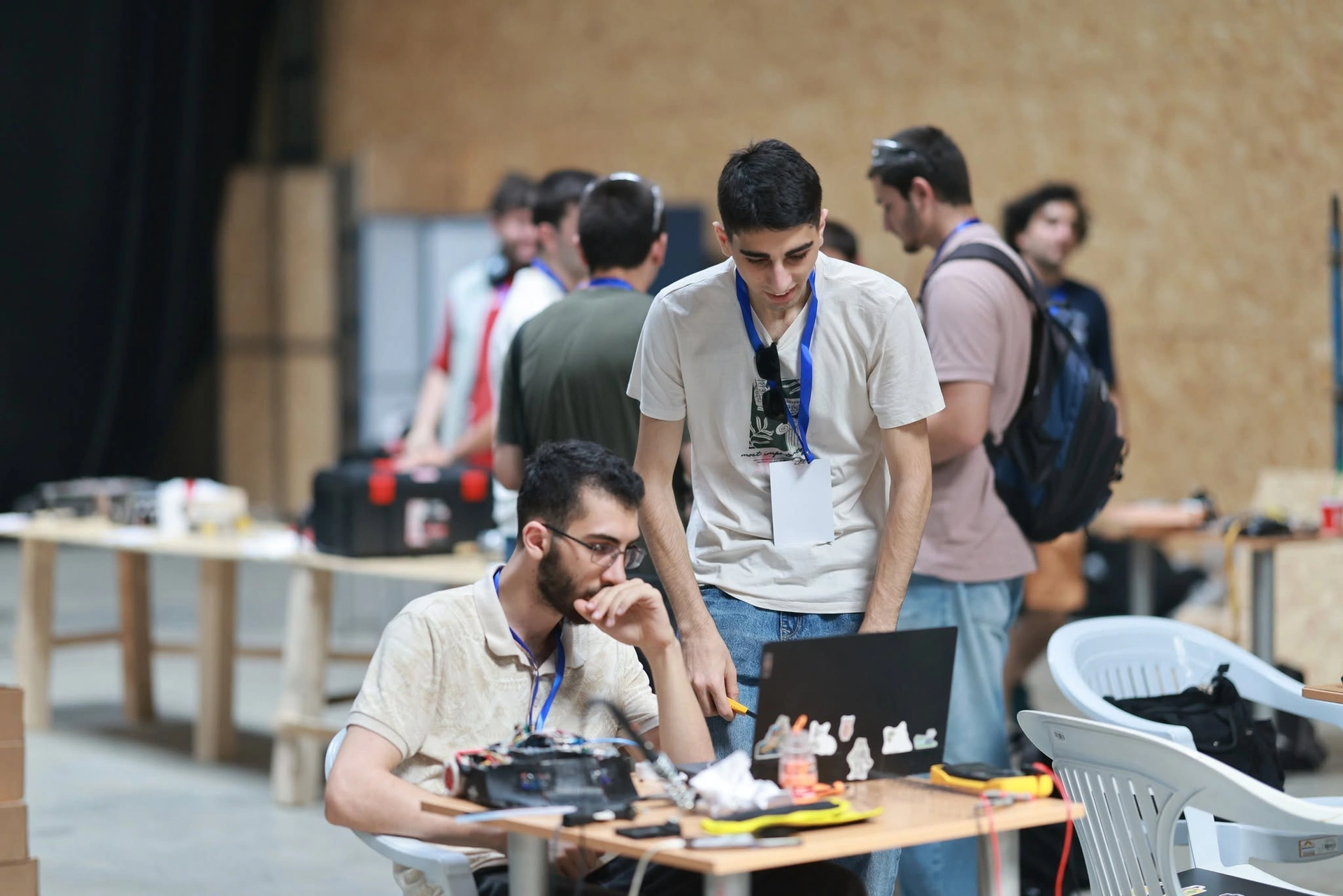
- The scale. ROBO BATTLE 2025 was a one-day technology festival on 26 July 2025 at Radio City | District 4, part of Tbilisi Digital Fest: 92 teams (315 participants) registered for the combat robot competition, and more than 10,000 visitors came — read the story.
The 2026 venue and entry conditions will be published on the championship page and the events page.
What changed since 2025
- An international championship. Teams from every country can take part in ROBO BATTLE 2026 — the first time GRA's combat robot championship goes international.
- Five classes instead of three. In 2025 there were Beetleweight (0.5–1.5 kg), Hobbyweight (1.5–5 kg) and Featherweight (5–15 kg). In 2026 their limits are 1.5 kg, 5.4 kg and 13.6 kg, and two pilot classes join them: the small Antweight (500 g) and the heavy Lightweight (27 kg).
- November instead of July. ROBO BATTLE 2025 took place on one day in July; for 2026 the championship page gives 21–28 November.
What stays the same: teams of 2–5 members aged 16+ who build their own robots.
What next
- Teams in the championship: pin the Tech Check list on the workshop wall, test the failsafe after every change, pack identical spare parts and keep an eye on the organisers' e-mails.
- Missed registration? Start now for the next championship: Designing a combat robot, How to build a combat robot, the electronics basics, the robotics glossary and, for the small classes, 3D printing.
- Volunteers and partners: get involved.
Every article about the championship is on the ROBO BATTLE topic page; the first overview of the classes and team rules is Combat robots: weight classes, teams and safety.