En
En 
Robotics glossary: the robot, its parts and mechanics
What is a sensor, a servo or PID? This robotics glossary explains 80 terms in Georgian and English, grouped by theme: mechanics, electronics, sensors, motors, control and programming, competitions and safety, 3D printing and radio control. Each term gets one or two plain sentences, and a link takes you to the guide that explains it in depth. Robotics terms in Georgian are still settling, so the English name is always given too — it is the one you will meet in datasheets and manuals.
The diagram shows a small two-wheeled robot from above: 1 — chassis; 2 — line sensor array; 3 — ultrasonic sensor; 4 — controller; 5 — motor driver; 6 — gear motor; 7 — encoder; 8 — the tyre (traction); 9 — ball caster; 10 — LiPo battery; 11 — switch; 12 — track width (W). You will find them all below.
- Robot (რობოტი) — a machine that senses the world with sensors, decides what to do with a program and acts with motors. → My first robot
- Autonomous robot (ავტონომიური რობოტი) — acts on its own program, with nobody steering: SUMO, line follower and maze robots. Its opposite is a remote-controlled robot (დისტანციურად მართვადი რობოტი), driven by an operator over radio — a combat robot, for example.
- Sensor (სენსორი) — the robot's "sense organ": it turns distance, light, rotation or tilt into an electrical signal.
- Controller (კონტროლერი) — the robot's "brain": it reads the sensors, runs the program and gives the motors their orders. Usually a microcontroller board.
- Actuator (აქტუატორი) — anything that makes movement: a motor, a servo, a solenoid or a pneumatic cylinder.
- Chassis (შასი) — the frame or plate that everything is mounted on: plywood, acrylic, aluminium or 3D-printed plastic.
Mechanics — wheels, gears and forces:
- Differential drive (დიფერენციალური მართვა) — two independently driven wheels: equal speeds go straight, different speeds turn, opposite speeds spin in place. Most small robots move this way.
- Track width (ბორბლებს შორის მანძილი) — the distance between the centres of the left and right wheels (W). Turning 90° in place, each wheel travels π·W/4. → The maze robot
- Ball caster (საყრდენი ბურთულა) — a freely rolling ball, the third point of support of a two-wheeled robot.
- Gearbox and gear ratio (რედუქტორი, გადაცემათა რიცხვი) — a set of gears that turns a motor's fast, weak rotation into a slow, strong one. 50:1 means the motor shaft turns 50 times for one turn of the wheel.
- Torque (მაბრუნი მომენტი) — turning "force", in newton-metres (N·m); servo labels often give kg·cm. More torque gets a heavy robot moving and accelerating more easily.
- Traction (მოჭიდება) — how well a tyre grips the surface. A robot cannot push harder than its weight times the friction coefficient — which is why tyres decide SUMO bouts. → How to build a SUMO robot
- Centre of gravity (სიმძიმის ცენტრი) — the point where the robot's whole weight can be thought to act. The lower it is, the harder the robot is to flip.
- Bearing (საკისარი) — a support for a shaft, with balls that cut friction; in a combat robot's spinning weapon it also takes the shock of the hits. → Designing a combat robot
Electronics terms
- Voltage (ძაბვა) — the "pressure" that drives current round a circuit, in volts (V). An Arduino Uno runs on 5 V, an ESP32 on 3.3 V.
- Current (დენი) — the flow of electric charge, in amperes (A). Motors draw amps; sensors draw milliamps (mA).
- Resistance (წინაღობა) — how much a material resists current, in ohms (Ω).
- Ohm's law (ომის კანონი) — U = I·R: voltage equals current times resistance. For example, an LED resistor on 5 V: (5 − 2) V / 0.015 A = 200 Ω. Power is P = U·I, in watts (W).
- Ground, GND (მიწა) — the circuit's common "zero" that voltages are measured from. All the grounds in a robot must be connected together.
- Short circuit (მოკლე ჩართვა) — "+" and "−" joined with almost no resistance: a huge current, hot wires and a battery that may catch fire.
- Breadboard (სამონტაჟო დაფა) — a board full of holes for building and testing a circuit without soldering.
- Resistor (რეზისტორი) — limits current or divides voltage; its value is shown by coloured bands.
- LED (შუქდიოდი) — a diode that lights up when current flows through it the right way; always use it with a resistor.
- Capacitor (კონდენსატორი) — stores charge and smooths short voltage dips; it protects the controller from motor noise.
- Transistor, MOSFET (ტრანზისტორი, MOSFET) — an electronic switch: a small signal switches a big current on and off. Motor drivers are built from MOSFETs.
- Voltage regulator (ძაბვის სტაბილიზატორი) — turns the battery's changing voltage into a steady 5 or 3.3 V for the controller and sensors.
- Switch and fuse (ჩამრთველი, დნობადი მცველი) — the switch turns the robot's power on and off; a fuse melts at too high a current and breaks the circuit before the wires or the battery are damaged.
- Multimeter (მულტიმეტრი) — measures voltage, current and resistance, and checks connections. The first tool you need in robotics.
- Soldering (რჩილვა) — joining parts with molten solder at about 300–350 °C. The iron in its stand, the room ventilated, safety glasses on.
- Datasheet (მონაცემთა ფურცელი) — the maker's document with a part's voltages, currents, pins and dimensions. Read it before you connect anything.
→ Everything in more depth — electronics basics.
Sensors: how a robot "sees"
- IR reflectance sensor and line sensor array (ინფრაწითელი არეკვლის სენსორი, ხაზის სენსორების მწკრივი) — shines infrared light and measures what comes back: white reflects a lot, black little. Five to eight of them in a row find the line's position precisely. → Building a line follower
- Ultrasonic sensor (ულტრაბგერითი სენსორი) — measures distance by a sound echo (HC-SR04 type); it finds the opponent in SUMO and the walls in a labyrinth.
- ToF sensor (ToF სენსორი) — time-of-flight: measures distance by the flight time of light, with a narrow beam and millimetre precision. → The maze robot
- Encoder (ენკოდერი) — counts a wheel's or shaft's rotation in pulses, so the robot knows how far it has gone and how fast.
- Gyroscope (გიროსკოპი) — measures how fast the robot is turning; used for precise turns.
- Accelerometer and IMU (აქსელერომეტრი, IMU) — an accelerometer measures acceleration and tilt; an IMU (inertial measurement unit) combines an accelerometer and a gyroscope in one chip.
- Analogue and digital signal (ანალოგური და ციფრული სიგნალი) — a digital signal has two values (0 or 1), an analogue one any value in between (an Arduino's analogue input reads 0–1023). See the diagram in the next section, 1 and 2.
- Calibration (კალიბრაცია) — fitting a sensor to real conditions: storing the minimum and maximum over line and background, or measuring a gyro's "zero" before the start.
→ Sensors at work — how to build a SUMO robot and SUMO competitions for beginners.
Motors, drivers and power
- DC motor (მუდმივი დენის ძრავა) — the simplest motor: apply a voltage and it turns; reverse the polarity and it turns the other way.
- Gear motor (რედუქტორიანი ძრავა) — a DC motor with a built-in gearbox, such as the small N20. Most small robots run on these.
- Brushless motor, BLDC (უჯაგრისო ძრავა) — a motor without brushes: powerful, efficient and long-lasting, but it needs a special controller (ESC). Used in drones and in combat robots' weapons.
- Servo (სერვომოტორი) — a motor that moves to a commanded angle (usually 0–180°) and holds it; inside are a gearbox, a potentiometer and a control circuit.
- Stepper motor (ბიჯური მოტორი) — turns in precise steps (often 200 per revolution); used in 3D printers and machine tools.
- Motor driver and H-bridge (ძრავის დრაივერი, H-ხიდი) — a driver turns the controller's weak signal into enough current for a motor; an H-bridge's four switches let the motor run both ways.
- ESC (ძრავის სიჩქარის რეგულატორი) — an electronic speed controller: the driver used in radio-controlled models, turning the receiver's signal into motor speed. → How to build a combat robot
- PWM (იმპულსის სიგანის მოდულაცია) — pulse-width modulation: controlling speed or brightness by switching on and off very fast. The longer the signal is on in each period (the duty cycle), the higher the average voltage the motor gets.
- Stall current (ჩაკეტვის დენი) — the current a motor draws when it is powered but cannot turn; the largest current, which the driver and the wires must be sized for.
- LiPo battery (LiPo აკუმულატორი) — a light, powerful lithium-polymer battery: one cell is 3.7 V (4.2 V fully charged); "2S" means two cells (7.4 V), mAh is the capacity and C the maximum current (1000 mAh at 20C → 20 A). A balance charger only, and never unattended.
In the diagram: 1 — a digital signal (0 or 5 V); 2 — an analogue signal (any value from 0 to 5 V); 3 — PWM at 25 %: the average voltage (the red line) is a quarter of the maximum; 4 — PWM at 75 %; 5 — a servo signal: a 1–2 ms pulse every 20 ms — the pulse length sets the servo's angle.
Control and programming
- Microcontroller (მიკროკონტროლერი) — a small computer on one chip: processor, memory and input/output pins. It runs one program over and over.
- Arduino (არდუინო) — popular open boards (Uno, Nano, Mega) and the Arduino IDE, used to program a microcontroller in a language based on C++. → Arduino for beginners
- Sketch (სკეტჩი) — an Arduino program: setup() runs once at power-up, loop() runs again and again.
- Pin (პინი) — one of the controller's "legs": a digital or analogue input, or an output (PWM included).
- Serial monitor (სერიული მონიტორი) — a window on your computer where the robot sends you numbers and messages; the main tool for finding bugs.
- Library (ბიბლიოთეკა) — ready-made code for a sensor, a motor or a display, so you do not have to write everything from scratch.
- Feedback (უკუკავშირი) — the robot measures the result and corrects itself (a closed loop). Without feedback (open loop) it does not know whether an order was carried out.
- PID controller (PID რეგულატორი) — computes a correction from the error — the difference between what you want and what you measure — in three parts: P — the error now, I — the error added up, D — how fast it changes. → Building a line follower
- State machine (მდგომარეობების მანქანა) — a program that switches between a few states (say WAIT → SEARCH → ATTACK); the ideal shape for SUMO and maze robots.
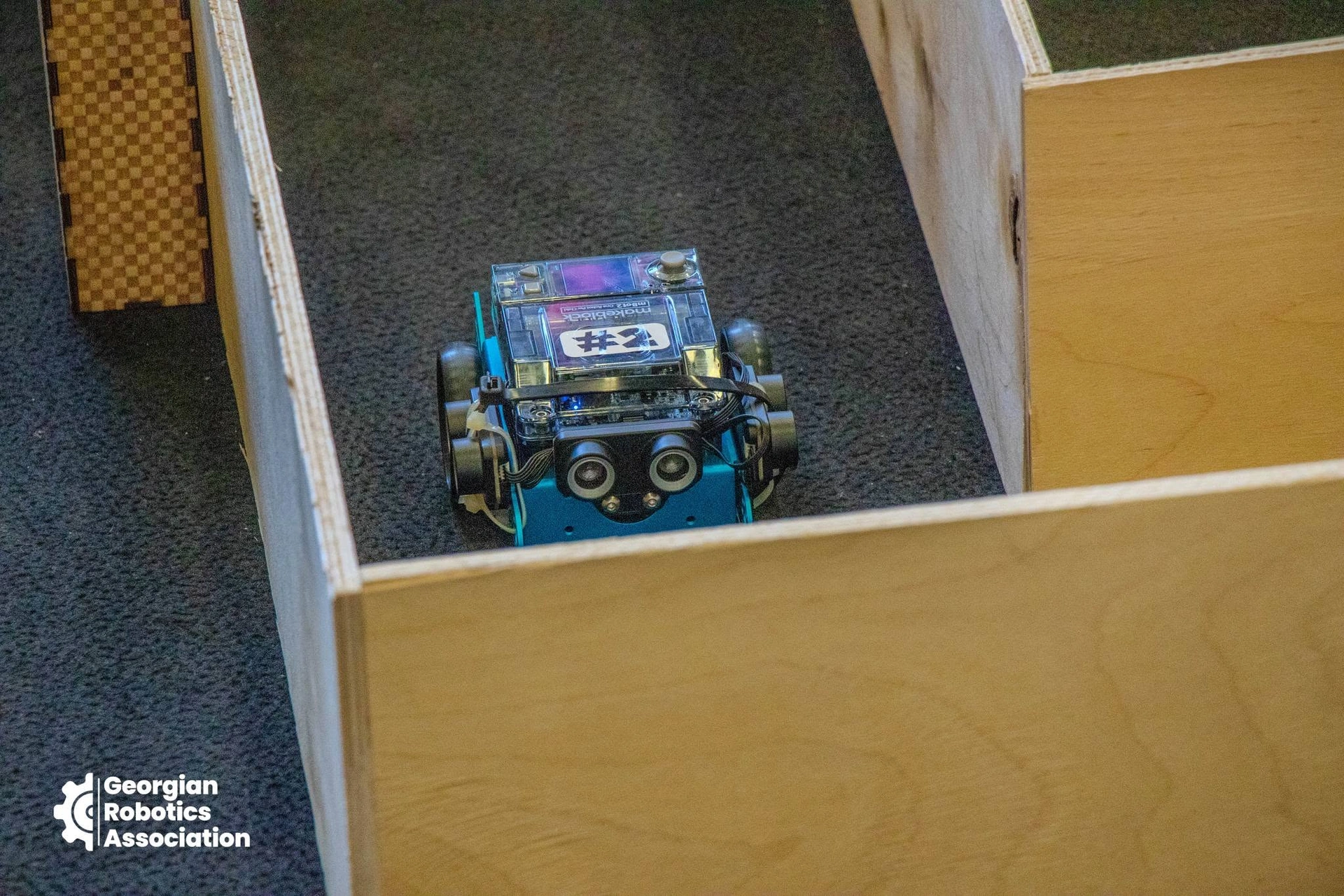
- Wall follower (კედლის მიყოლა) — a maze algorithm: the robot keeps to one wall (the right-hand one, say) and so reaches the exit.
- Flood fill (დატბორვის ალგორითმი) — every cell gets its distance to the goal and the robot always heads for lower numbers; the micromouse classic. → The maze robot
- Odometry (ოდომეტრია) — estimating position from wheel rotation (encoders): how far the robot has gone and how much it has turned.
Competitions and safety
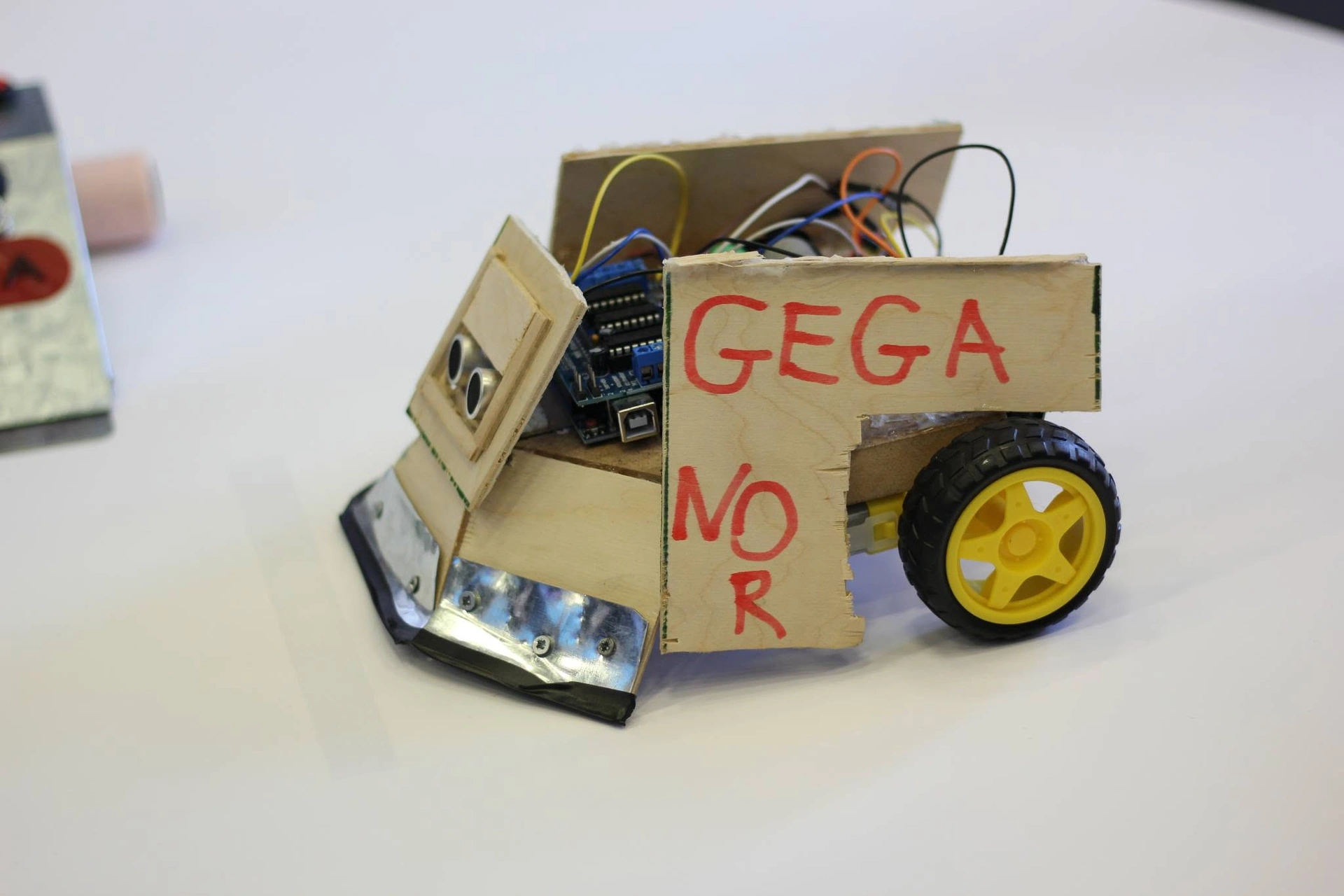
- SUMO robot (სუმო რობოტი) — an autonomous robot that pushes its opponent out of a round ring (the dohyo). GRA's 2026 rules had Mini Sumo (up to 0.5 kg) and Mega Sumo (up to 3 kg). → SUMO competitions, the 2026 championship
- Line follower (ხაზზე მავალი რობოტი) — an autonomous robot that follows a line as fast and as precisely as it can. → Build, rules
- Maze, labyrinth (ლაბირინთი) — a school competition task: the robot finds its own way to the exit; in GRA's 2026 school rules, 30 cm corridors and 3 minutes. → School robotics, the 2026 school competition
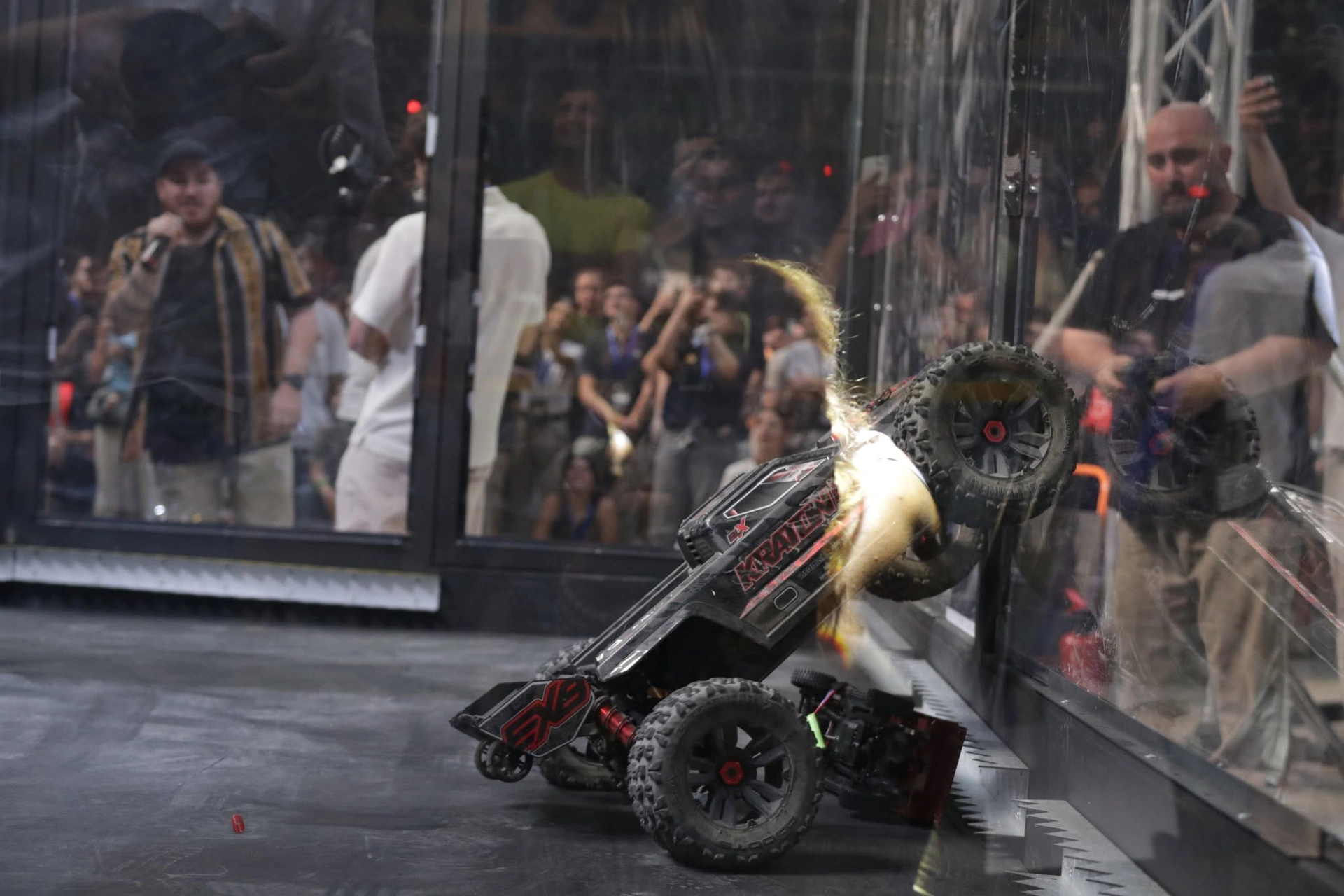
- Combat robot (საბრძოლო რობოტი) — a remote-controlled robot that fights another robot in a closed arena. → Classes, teams, safety, ROBO BATTLE 2025
- Weight class (წონითი კატეგორია) — the maximum weight that decides who fights whom. ROBO BATTLE 2026 has five classes, from Antweight (500 g) to Lightweight (27 kg). → ROBO BATTLE 2026: the guide
- Start module (სტარტის მოდული) — a receiver through which the referee starts and stops an autonomous robot with an infrared signal; required in both classes of GRA's 2026 SUMO rules.
- Failsafe (ავარიული გაჩერება კავშირის დაკარგვისას) — if the radio link is lost, the robot stops by itself. ROBO BATTLE 2026's rules require the drive and every active weapon to go into a safe, disabled state automatically when the signal is lost, the transmitter is switched off or the control system loses power.
- Kill switch (ავარიული გამომრთველი) — a switch that cuts the robot's power at once; at ROBO BATTLE 2026 it must be easy to reach and away from the weapon.
- Weapon lock (იარაღის საკეტი) — a mechanical lock that holds the weapon still outside the arena.
- Tech Check (ტექნიკური შემოწმება) — the inspection before the fights: weight, control, failsafe, active weapon, weapon lock and power system. At ROBO BATTLE 2026 — a week before the event. → ROBO BATTLE 2026
3D printing and radio control
- FDM 3D printer (3D პრინტერი) — builds a part layer by layer from melted plastic filament. → 3D printing a robot
- Filament (ფილამენტი) — the printer's "ink": PLA (easy), PETG (tougher, less brittle), TPU (rubbery, for tyres), nylon (very tough).
- Slicer (სლაისერი) — software that "slices" a 3D model into layers and writes the printer's instructions (G-code).
- Infill (შევსება) — the inner pattern of a part, in per cent. More walls (perimeters) add more strength than a high infill.
- Tolerance (დაშვება) — the clearance you leave between parts so that they fit: a hole slightly larger than its shaft, for example.
- Transmitter (გადამცემი) — the operator's handset with sticks; it sends commands by radio, usually on 2.4 GHz. → Radio control for robots
- Receiver (მიმღები) — the unit on the robot that picks up the transmitter's signal and splits it into channels for the ESCs and servos.
- Channel (არხი) — one independent command: say, 1 — steering, 2 — forward/back, 3 — weapon.
- Binding (დაწყვილება) — pairing a receiver with one particular transmitter, so that the robot listens only to your handset.
- Mixing (მიქსირება) — blending two commands onto two motors: tank steering on one stick, for example.
→ Radio control in action — the 2026 RC car championship.
What next
- Start here — my first robot, electronics basics and Arduino for beginners.
- Build — a SUMO robot, a line follower, a maze robot, a combat robot; print and control — 3D printing, radio control.
- For schools — a robotics club at school, the GRA network and STEAM projects 2026.
- Competitions — all competitions, ROBO BATTLE 2026 and upcoming events; as a volunteer or partner — get involved.
- Every guide — guides.