En

Introduction
Team Georgia at RoboChallenge 2026
Georgia’s national robotics team is competing at RoboChallenge 2026 in Bucharest from 30 October to 1 November 2026. It is one of the largest international robotics championships in Europe: according to the organisers, more than 1,500 competitors from 34 countries and over 1,300 robots are taking part this year. Our three teams compete in Mega Sumo, Mini Sumo and Line Follower, and this is the first time a Georgian national team has entered the championship.
The team has arrived in Romania. The three teams earned their place at our championship: at Georgia’s STEAM and Robotics Championship in Tbilisi on 20 June 2026, each of them won its category.
Below: what RoboChallenge is, how big it has become, which events our teams are in, and how we got here. Results are not known yet: the championship is under way.
Who represents Georgia at RoboChallenge 2026?
The team is made up of the three winning teams of Georgia’s 2026 robotics championship, a mix of student and family teams:
- RageByte, Mega Sumo: Dachi Nazrishvili, Eto Chakhvashvili, Misho Kalandarishvili, Nini Gotsadze;
- Kokadama, Mini Sumo: Konstantine Kvaratskhelia, Kakhaber Kvaratskhelia, Davit Kvaratskhelia, Maia Tsulaia;
- Kavtazi, Line Follower: Rati Gogichashvili, Nino Meshveliani.
We wrote a separate article on each team’s win, the championship rules and the team photos: Georgia’s STEAM and Robotics Championship 2026 winners.
What is RoboChallenge?
RoboChallenge is an international robotics competition hosted every year by the National University of Science and Technology POLITEHNICA Bucharest. It is organised by the university, its Faculty of Electronics, Telecommunications and Information Technology (ETTI) and the League of Electronics Students (LSE), and it is part of the Romanian Ministry of Education’s official calendar of national competitions.
The 2026 event is the 17th edition of RoboChallenge and the centrepiece of ROBOFEST, the university’s three-day technology festival, now in its fifth year, which the organisers call the largest robotics event in Europe. Entry for spectators is free: robot sumo, line follower races, humanoid robots and student projects all share one campus.
What makes it serious is the rulebook. Every category has its own regulation, every robot passes homologation (size, mass and safety checks) before it competes, and sumo matches are supervised by three referees.
RoboChallenge 2026 in numbers
Last year’s official figures and this year’s preliminary numbers show how fast the championship is growing (2025, 16th edition → 2026, 17th edition):
- Competitors: 1,230+ → 1,500+;
- Countries: 30 → 34;
- Teams: 230 → 260+;
- Robots: 1,171 → 1,300+;
- Events: 20 → 22.
In 2025 the organisers broke every previous record for teams, competitors, robots and countries, and about 15,000 visitors came over three days. Teams travelled from Japan, the USA, Brazil, Mexico, Poland, Türkiye, Greece, Kenya, Malaysia and, from our region, Armenia and Azerbaijan. Georgia was not among the 30 countries then. In 2026 a Georgian team appears on that list for the first time.
22 events in 5 categories
According to RoboChallenge’s official page, the 2026 programme has 22 events:
- Sumo (7): Mega, Mega RC, Mini, Mini Kids, Micro, Nano and Humanoid sumo;
- Line Follower (6): Standard, Kids, Enhanced, Turbo, Advanced and the NXP Track Follower;
- Combat robots (2): 500 g and 1.5 kg;
- Freestyle Showcase (3): creative projects for kids, high school and university;
- Special challenges (4): Maze, Humanoid Triathlon, Robot Football and Micromouse.
Registration closed on 10 October. The team fee is 35 EUR (free in some cases), but travel, accommodation and building the robots are paid by the teams themselves.
Which categories does Georgia compete in?
All three Georgian categories are for autonomous robots: once a round starts, nobody steers the robot; its program and sensors make every decision. The key requirements from RoboChallenge’s 2026 rules:
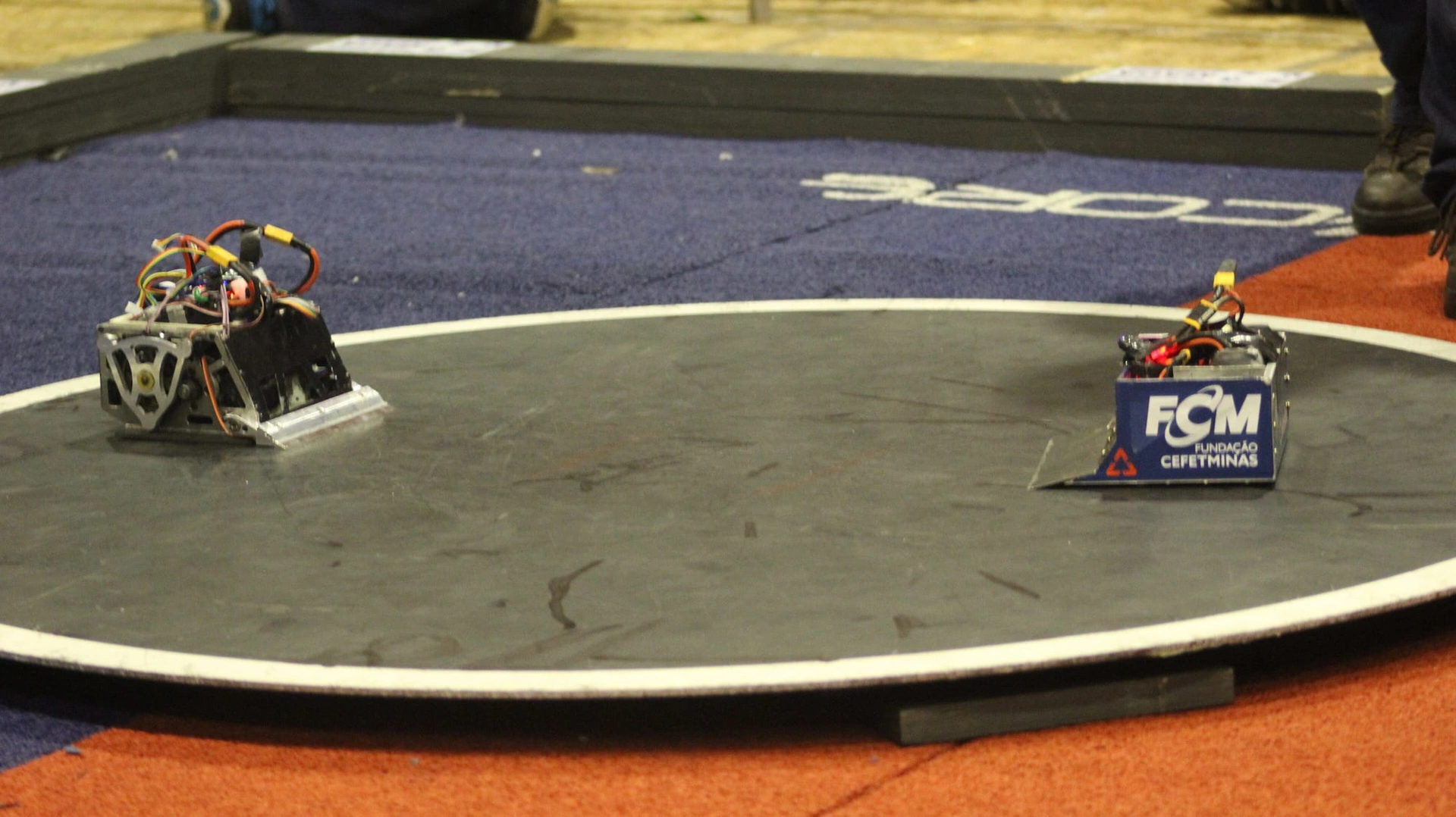
- Mega Sumo: the robot fits a 20×20 cm square, weighs up to 3 kg and competes on a steel ring 154 cm in diameter;
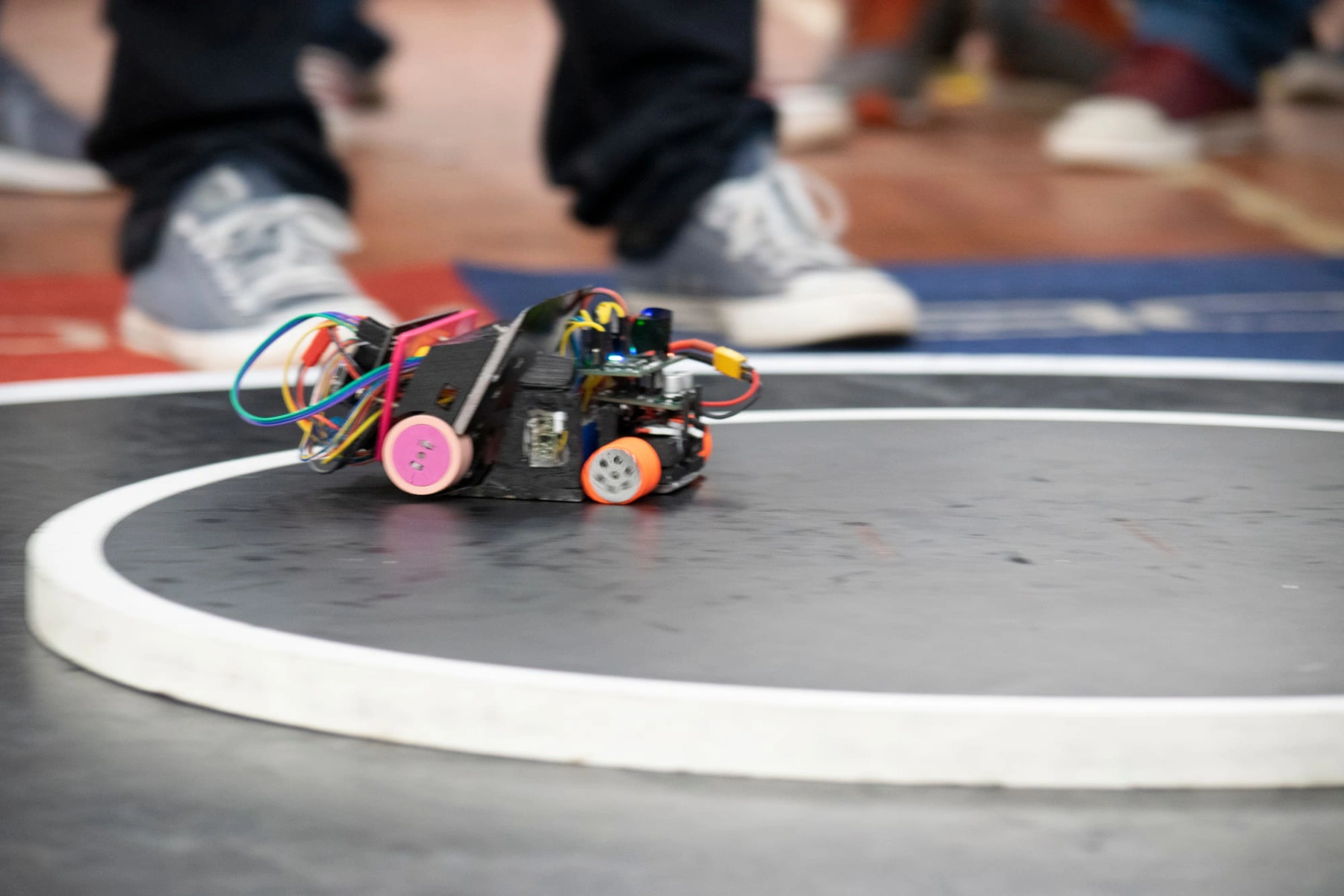
- Mini Sumo: fits a 10×10 cm square, up to 500 g, on a wooden ring 77 cm in diameter;
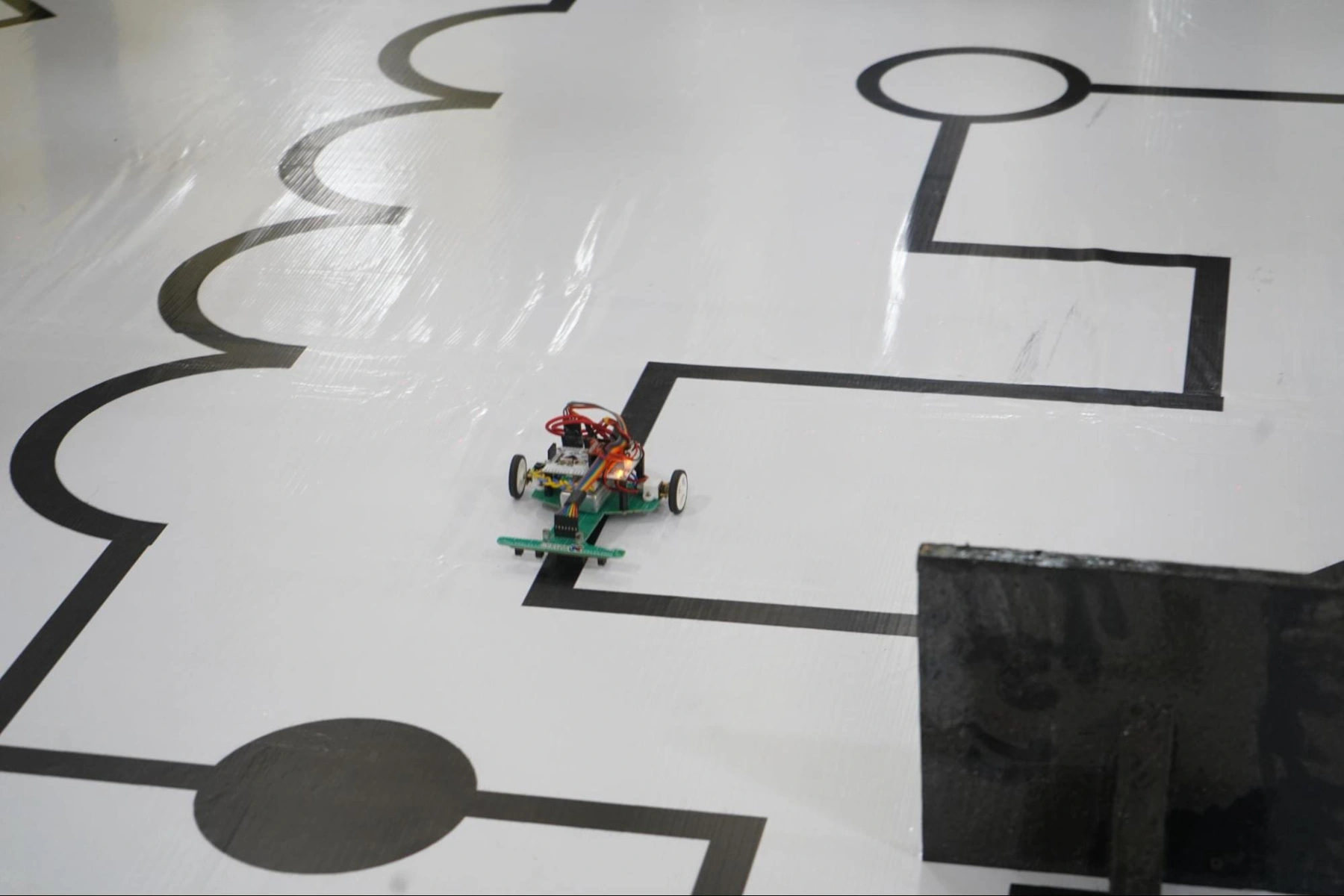
- Line Follower: at most 25×25 cm, up to 1 kg, on a white track with a 15 mm black line.
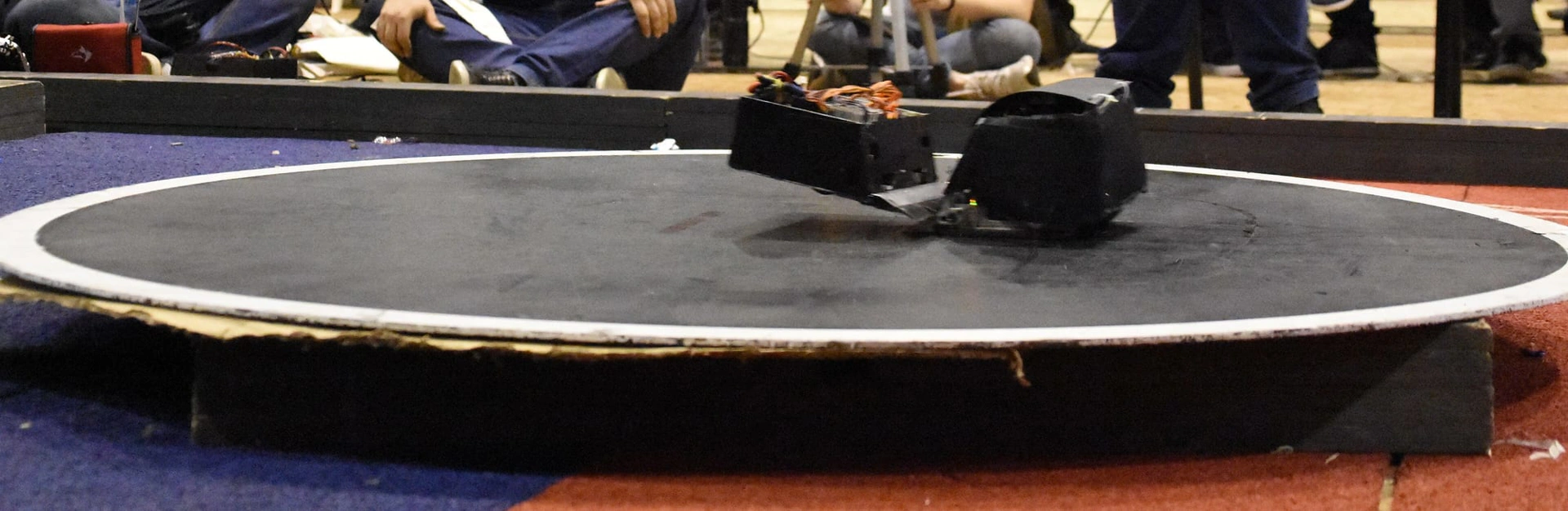
In sumo, two robots meet on a ring and each tries to push the other out. A match is three rounds in three minutes and the first robot to score two points (Yuhkoh) wins. Every robot must carry an infrared start/stop module that the referee triggers with a remote. One interesting difference: magnets and vacuum pumps that press the robot onto the ring are allowed in Mega Sumo but banned in Mini Sumo. More in Mega Sumo: the 3 kg sumo robot and the mini sumo robot.
In Line Follower, the robot follows a black line as fast as it can. The track has curves and sharp angles, mapping the track is forbidden and each run is capped at three minutes. In the first two hours every robot gets up to three runs, then the ten fastest get extra attempts. The engineering is explained in the competition line follower robot.
The road to Bucharest: Georgia’s STEAM and Robotics Championship
The team was selected at our national championship. On 20 June 2026, at Radio City | District 4 in Tbilisi, we held Georgia’s STEAM and Robotics Championship: more than 500 participants, more than 50 schools and thousands of visitors. Four competitions ran on the same day: the robotics championship (SUMO and Line Follower), school robotics, a STEAM projects contest and an RC car race. How the day went: the championship report.
The robotics championship was open from age 14, teams had 2–5 members and remote control was not allowed. The three winners of SUMO and Line Follower earned the right to represent Georgia at the European championship. The rules: SUMO and Line Follower 2026.
We have been running school robotics competitions since 2022 (our championships year by year) and have been a member of the International Federation of Robotics (IFR) since May 2026. Our next big event, the combat robot championship ROBO BATTLE 2026, takes place on 21–28 November, for the first time in an international format.
Who supported the team?
RoboChallenge does not cover teams’ travel or accommodation, so we looked for supporters. The trip needed 23,000 GEL for flights, accommodation in Bucharest, robot parts and testing, and team kit. How you can still help: Team Georgia at RoboChallenge 2026: How You Can Help.
We thank the team’s main supporters, Tegeta Robotics and the University of Georgia, and our supporters Ialonix, Arte, EEC Georgia and Tbilisi Digital School. With their help, Georgian robotics takes its first step onto the European stage.
How to get to a championship like this
Competitive sumo robots and line followers share three things: precise mechanics, reliable electronics and well-tuned code. A sumo robot needs a low centre of gravity, strong motors, grippy wheels, edge sensors so it never drives itself off the ring, and sensors that find the opponent. A line follower needs a sensor array, a light chassis and a PID controller that smooths speed and steering through every curve.
Tips for the next national team
- Start with a local competition: our championship is open from age 14, in teams of 2–5.
- For a first robot choose mini sumo or a line follower: the parts are cheap and you can test at home.
- Always work from the current year’s rulebook: size, mass and the start module are checked at homologation.
- Spend half your time testing. At the event the robot runs under different light on a different surface.
The foundations are the same for both: Arduino for beginners, electronics basics for robotics, how to build a SUMO robot and building a line follower. Starting from zero? Read My First Robot.
How to follow the results
The championship ends on 1 November. Results are published in the standings section of the official RoboChallenge site. We will share news, photos and results of the Georgian teams on our blog and Facebook page, and update this article as news comes in.
Frequently asked questions
When and where is RoboChallenge 2026?
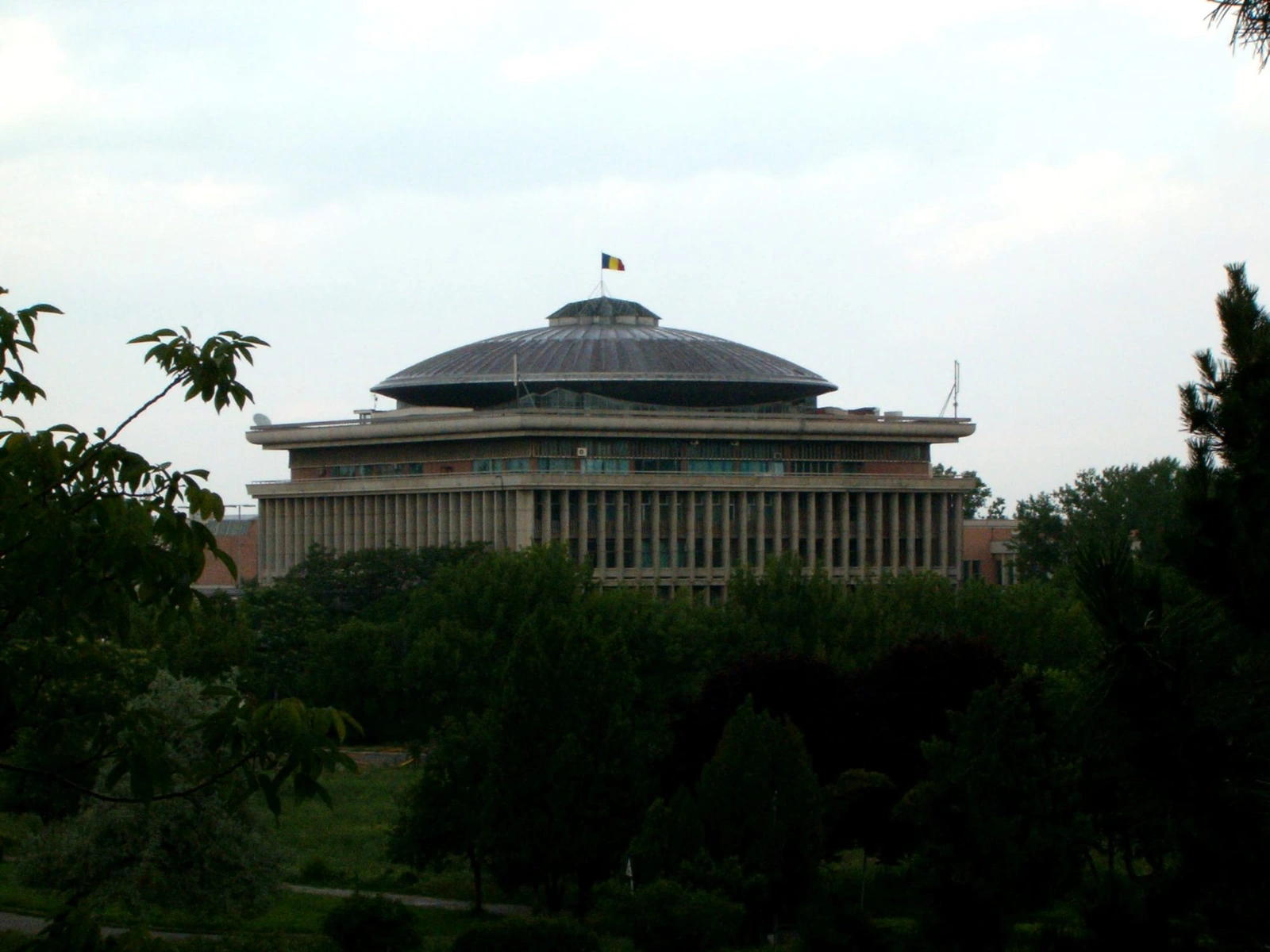
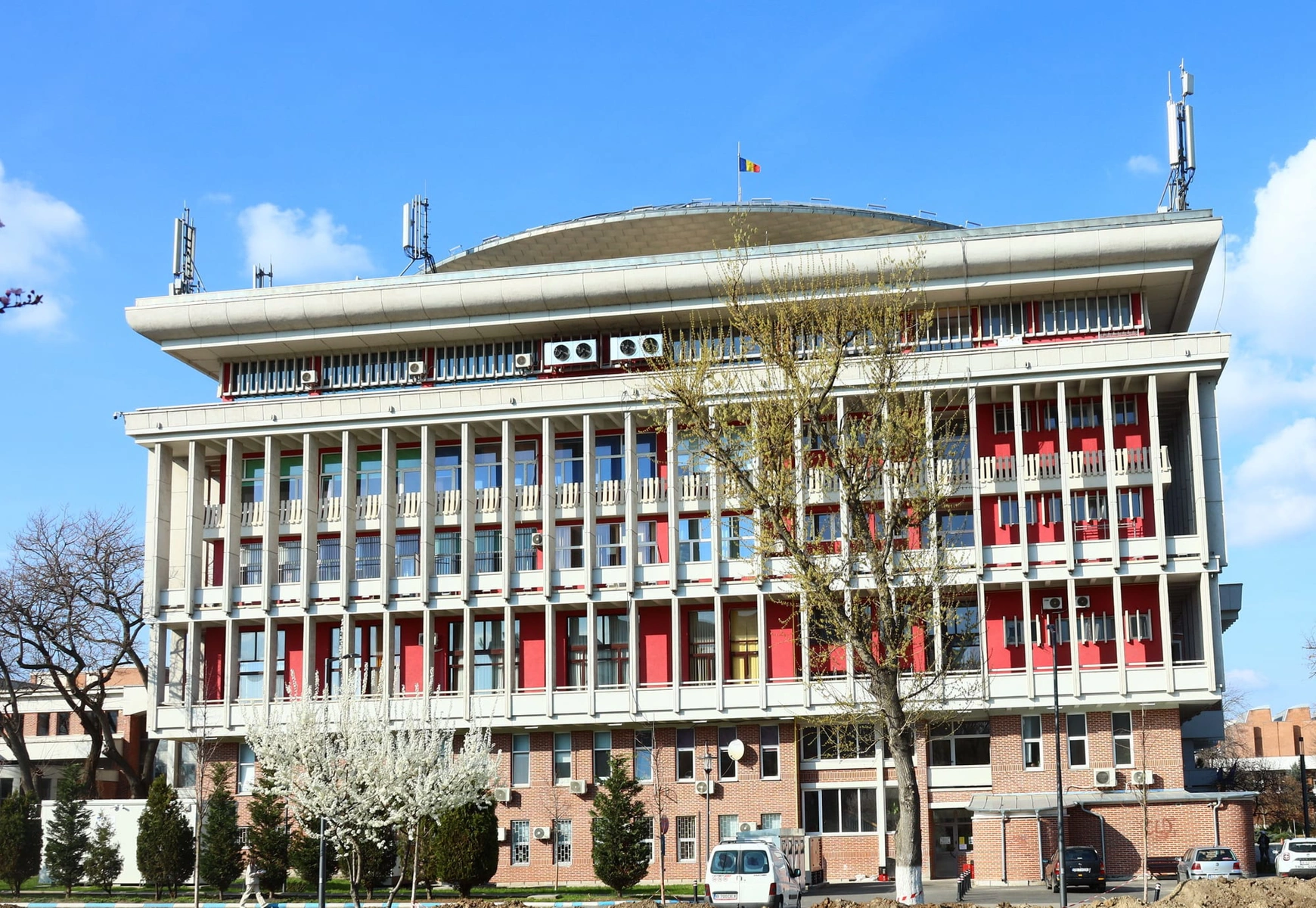
From 30 October to 1 November 2026 at the National University of Science and Technology POLITEHNICA Bucharest (Rectorate and the AN and BN buildings, Splaiul Independenței 313). Entry for spectators is free and needs no registration.
How many countries and competitors are at RoboChallenge 2026?
According to the organisers’ preliminary figures, ROBOFEST 2026 brings together more than 1,500 competitors from 34 countries in over 260 teams, with more than 1,300 robots across 22 events. In 2025 there were 1,230+ competitors from 30 countries and 1,171 robots.
Who represents Georgia at RoboChallenge?
The three winners of Georgia’s 2026 robotics championship: RageByte (Mega Sumo), Kokadama (Mini Sumo) and Kavtazi (Line Follower), entered by the Georgian Robotics Association.
Is this Georgia’s first time at RoboChallenge?
Yes: this is the first time a Georgian national team takes part. Georgia was not on the official list of 30 countries in 2025.
How can I get onto Georgia’s robotics team?
The team is made up of national championship winners. Our SUMO and Line Follower championship is open from age 14, in teams of 2–5, with a robot you built yourselves. Registration for upcoming competitions opens on our competitions page.
Next step
If you are curious about robots and would like to compete at a championship like this one day, start with our competitions: current and upcoming championships are on the competitions page. Our next big event, ROBO BATTLE 2026, runs on 21–28 November: a guide for teams and spectators. Until then, let’s cheer for Georgia’s team in Bucharest!
Sources
- About ROBOCHALLENGE 2026, RoboChallenge
- RoboChallenge 2025: 16th edition results, RoboChallenge
- Mega Sumo 3kg auto Rules, RoboChallenge
- Mini Sumo Rules, RoboChallenge
- Line Follower Rules, RoboChallenge
- ROBOFEST 2026 at Politehnica Bucharest (in Romanian), Edupedu.ro
- Bucharest Polytechnic to host Europe’s largest robotics battle at ROBOFEST 2025, Agerpres
- Photos: Mister rf (CC BY-SA 4.0) and Andrei Stroe (CC BY-SA 3.0), Wikimedia Commons.