En

Introduction
Winners of the Georgian Robotics Championship 2026
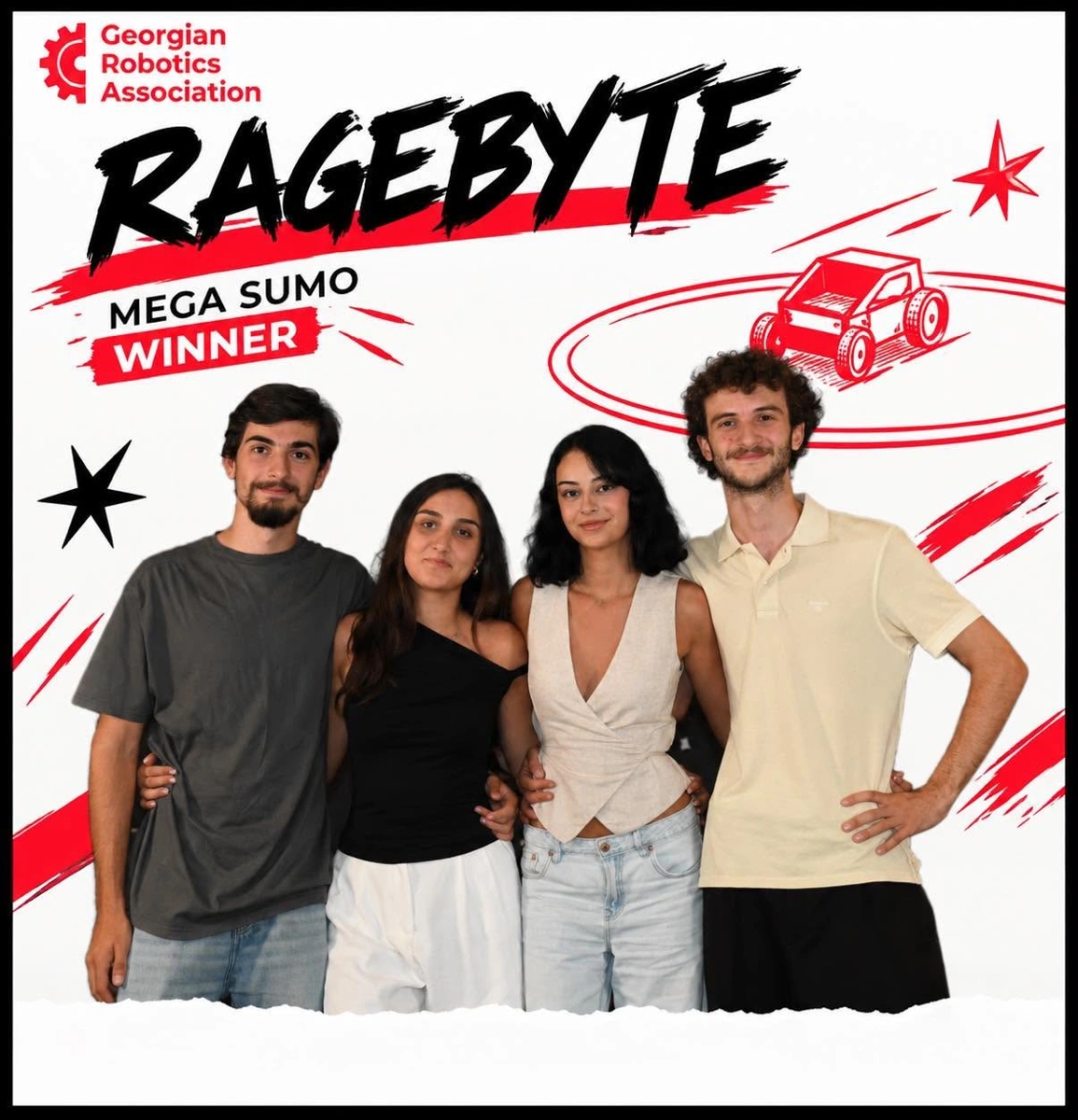
At Georgia’s STEAM and Robotics Championship 2026, which we held in Tbilisi on 20 June, the three autonomous robot categories were won by RageByte (Mega Sumo), Kokadama (Mini Sumo) and Kavtazi (Line Follower). All three teams earned the right to represent Georgia at the European championship and are now competing at RoboChallenge 2026 in Bucharest.
The winners by category:
- Mega Sumo, RageByte: Dachi Nazrishvili, Eto Chakhvashvili, Misho Kalandarishvili, Nini Gotsadze;
- Mini Sumo, Kokadama: Konstantine Kvaratskhelia, Kakhaber Kvaratskhelia, Davit Kvaratskhelia, Maia Tsulaia;
- Line Follower, Kavtazi: Rati Gogichashvili, Nino Meshveliani.
These are the winners of the robotics championship’s SUMO and Line Follower categories; the other competitions on the day (school robotics, STEAM projects, RC cars) had their own winners. Below we introduce each team and category and describe how the championship itself was run.
RageByte: Mega Sumo winners
Members: Dachi Nazrishvili, Eto Chakhvashvili, Misho Kalandarishvili, Nini Gotsadze.
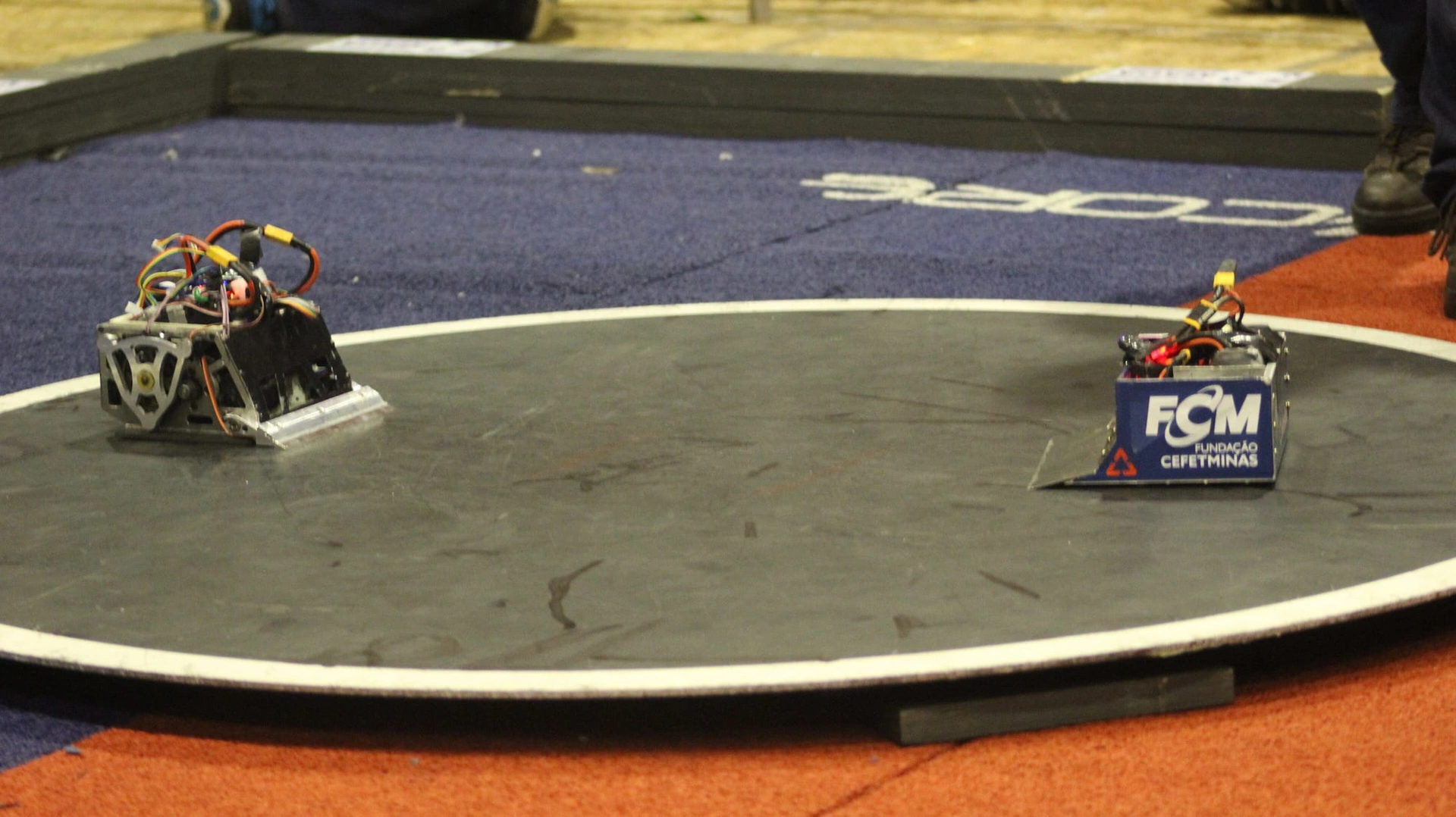
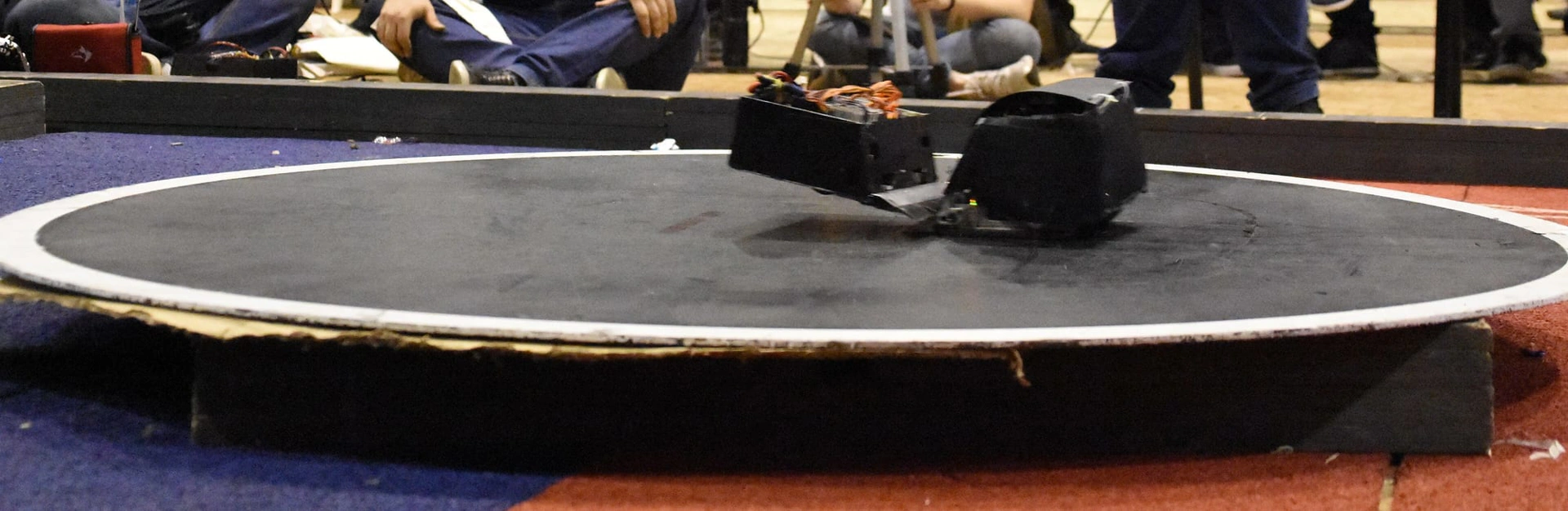
Mega Sumo is the heaviest sumo robot class. At our championship a robot had to weigh 0.5–3 kg and fit in a 20×20 cm box. Two autonomous robots meet on a ring and each tries to push the other out, so power, traction, a low centre of gravity and split-second reactions decide everything.
How a 3 kg sumo robot is built and which rules it follows internationally: Mega Sumo: the 3 kg sumo robot.
Kokadama: Mini Sumo winners
Members: Konstantine Kvaratskhelia, Kakhaber Kvaratskhelia, Davit Kvaratskhelia, Maia Tsulaia.
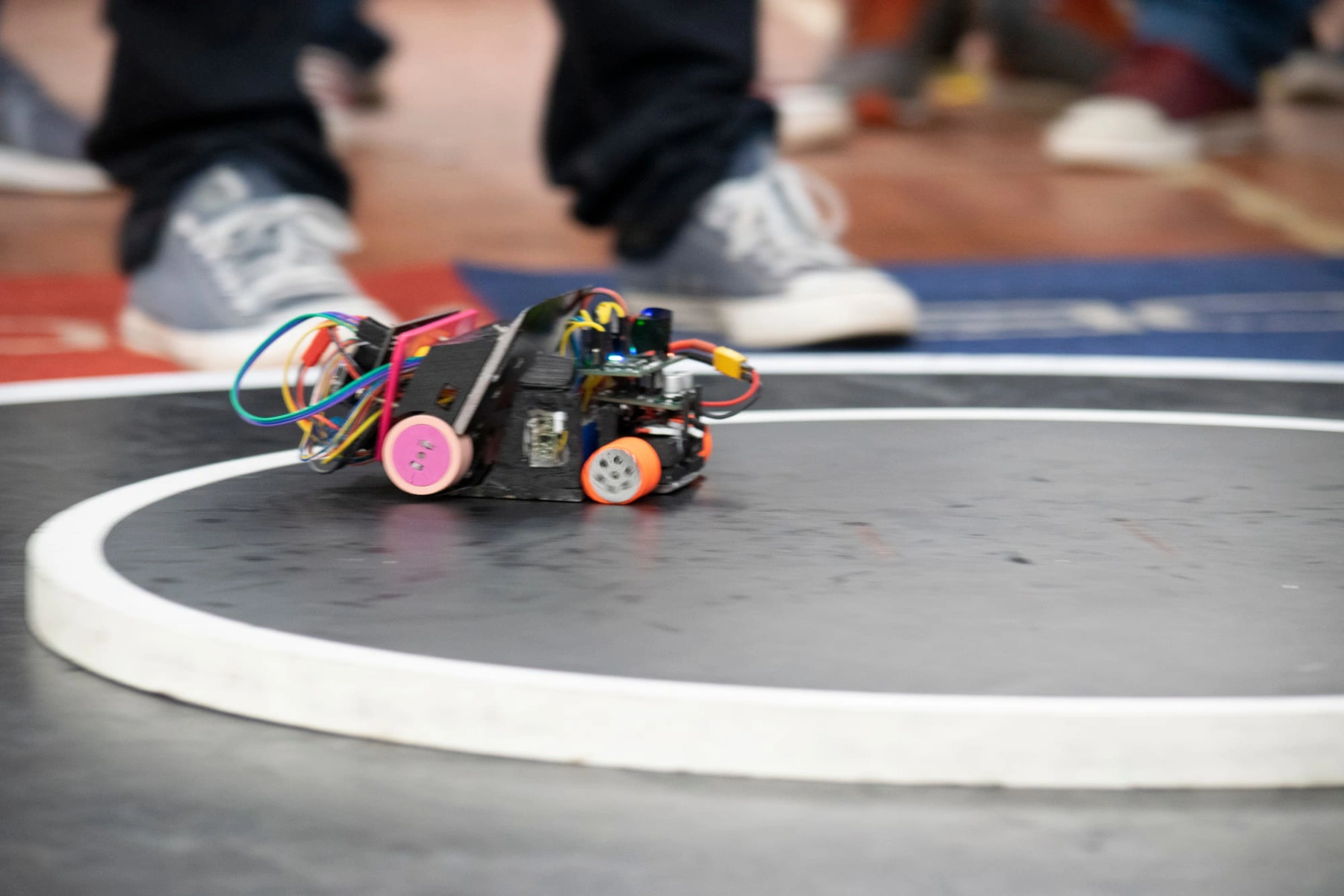
Mini Sumo is the same sport at a smaller scale: under our rules a robot weighs up to 0.5 kg and fits in a 10×10 cm box. At this size every gram and millimetre counts; where a big robot has room for the battery and motors, here fitting the parts together is an engineering problem of its own. Mini sumo is often the first serious competition for people who are just starting out in robotics.
Parts, sensors, strategy and the build: the mini sumo robot.
Kavtazi: Line Follower winners
Members: Rati Gogichashvili, Nino Meshveliani.
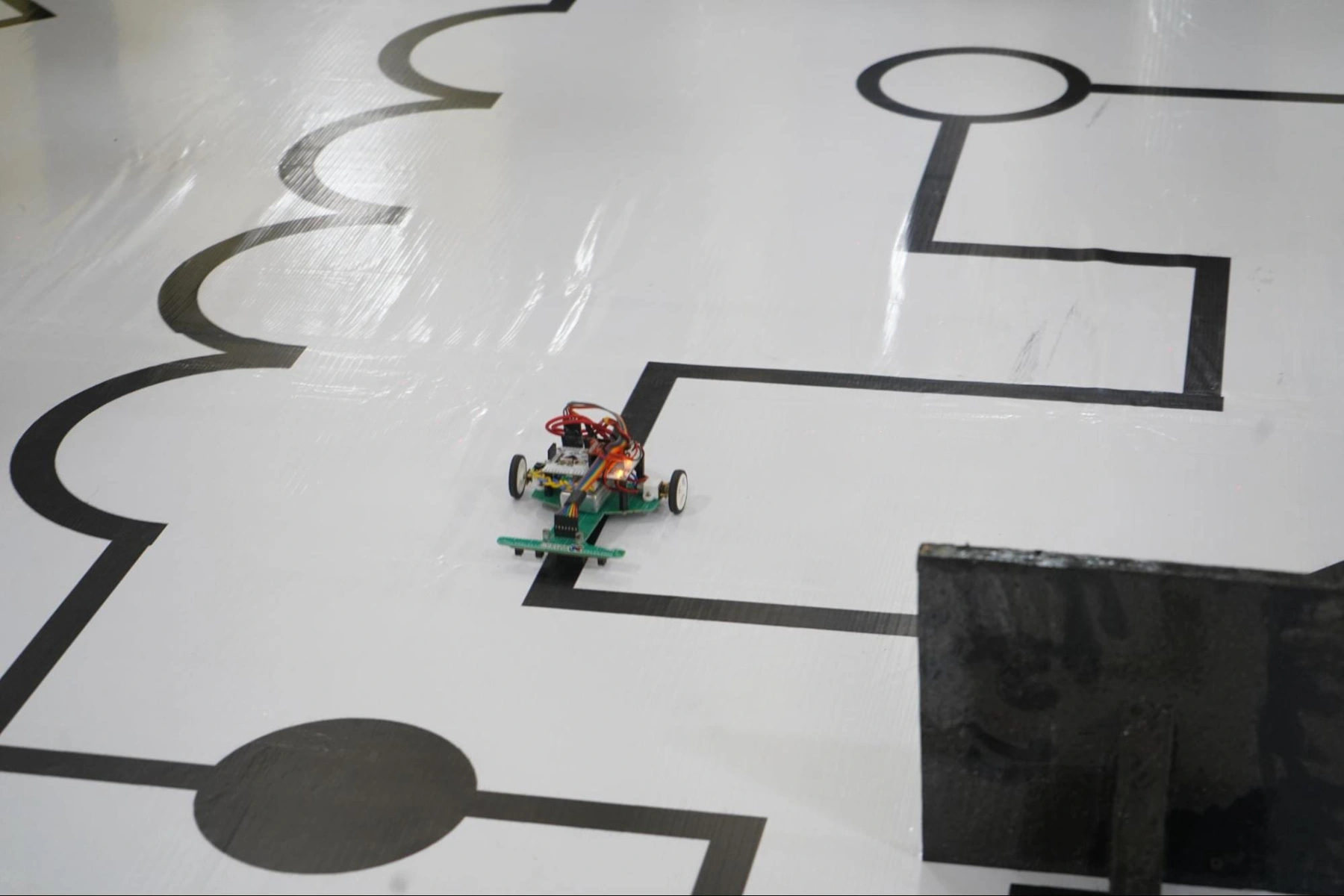
In Line Follower the robot must follow a black line as fast and as precisely as possible. At our championship the class was called “Line Follower Classic”: robots up to 3 kg that fit in a 30×30 cm box. Winning takes well-placed sensors, a light chassis and a well-tuned PID controller, so the robot keeps both the line and its speed through every curve.
How a robot “sees” the line and what wins races: the competition line follower robot.
How was Georgia’s STEAM and Robotics Championship 2026 run?
The championship took place on 20 June 2026 at Radio City | District 4 in Tbilisi as a one-day technology festival. More than 500 participants and more than 50 schools took part and thousands of visitors came during the day (final figures: 80+ teams and 5,000+ guests). The full report: the championship successfully concludes.
Four competitions ran side by side:
- Georgia’s Robotics Championship: SUMO and Line Follower categories for autonomous robots;
- School Robotics Championship: practical challenges for school students, judged on programming and logical thinking (school robotics competition 2026);
- STEAM projects contest: school teams presented their prototypes and engineering projects at stands, and a jury chose the winners (STEAM project competition 2026);
- RC car championship: a race for remote-controlled cars (how the race went).
Besides the competitions, visitors found technology workshops, masterclasses and demonstrations, a drone flying zone, cybersecurity quizzes and a hackathon, board games and partner stands.
The championship’s partners were Ilia State University, IT Academy Step Georgia, Kakhas RC, the Board Games Guild, Tamashobana, a first aid centre, the Scientific Cybersecurity Association and a drone school. Thank you all!
What were the rules?
The robotics championship brought together people from all over Georgia who build autonomous robots of their own design. The main rules:
- open to anyone from age 14, including school teams;
- teams of 2–5 members, and one team could enter several categories;
- the robot performed every task on its own, with its own program: remote control was not allowed.
The categories:
- Mini SUMO: up to 0.5 kg, 10×10 cm box, task: push the opponent out of the ring;
- Mega SUMO: 0.5–3 kg, 20×20 cm box, task: push the opponent out of the ring;
- Line Follower Classic: up to 3 kg, 30×30 cm box, task: finish the line track fastest.
Full rules: Georgian Robotics Championship 2026: SUMO and Line Follower.
The international rules at RoboChallenge are stricter: a line follower there may weigh at most 1 kg and measure 25×25 cm, and in Mini Sumo devices that press the robot onto the ring (vacuum, fans) are banned. Moving from the national to the European championship often means rebuilding the robot.
Preparing for the next championship
- Pick one category and study its rulebook first: size, mass, ring or track.
- Build a simple but reliable robot. At a first competition, consistency beats speed.
- Make a practice ring or track at home: a black surface with a white edge, or black tape on a white board.
- Compete as a team of 2–5 and split the roles: mechanics, electronics, code.
How our championship grew
The 2026 championship is the result of several years of work. Our competitions grew like this:
- 2022, first school competition: 75 teams from grades 9–12;
- 2023, school competition at Sportsfest: 600 students from 85 schools;
- 2024, Robo Festival: 20 school teams and 17 SUMO teams;
- 2025, ROBO BATTLE 2025: 92 combat and 49 SUMO teams, 10,000+ visitors;
- 2026, STEAM and Robotics Championship: 500+ participants, 50+ schools.
Along the way, the school robots’ straight-line and maze tasks were joined by autonomous sumo and line follower robots, and in 2026 the national championship sent its winners to an international championship for the first time. More: our championships year by year.
From the national title to the European championship
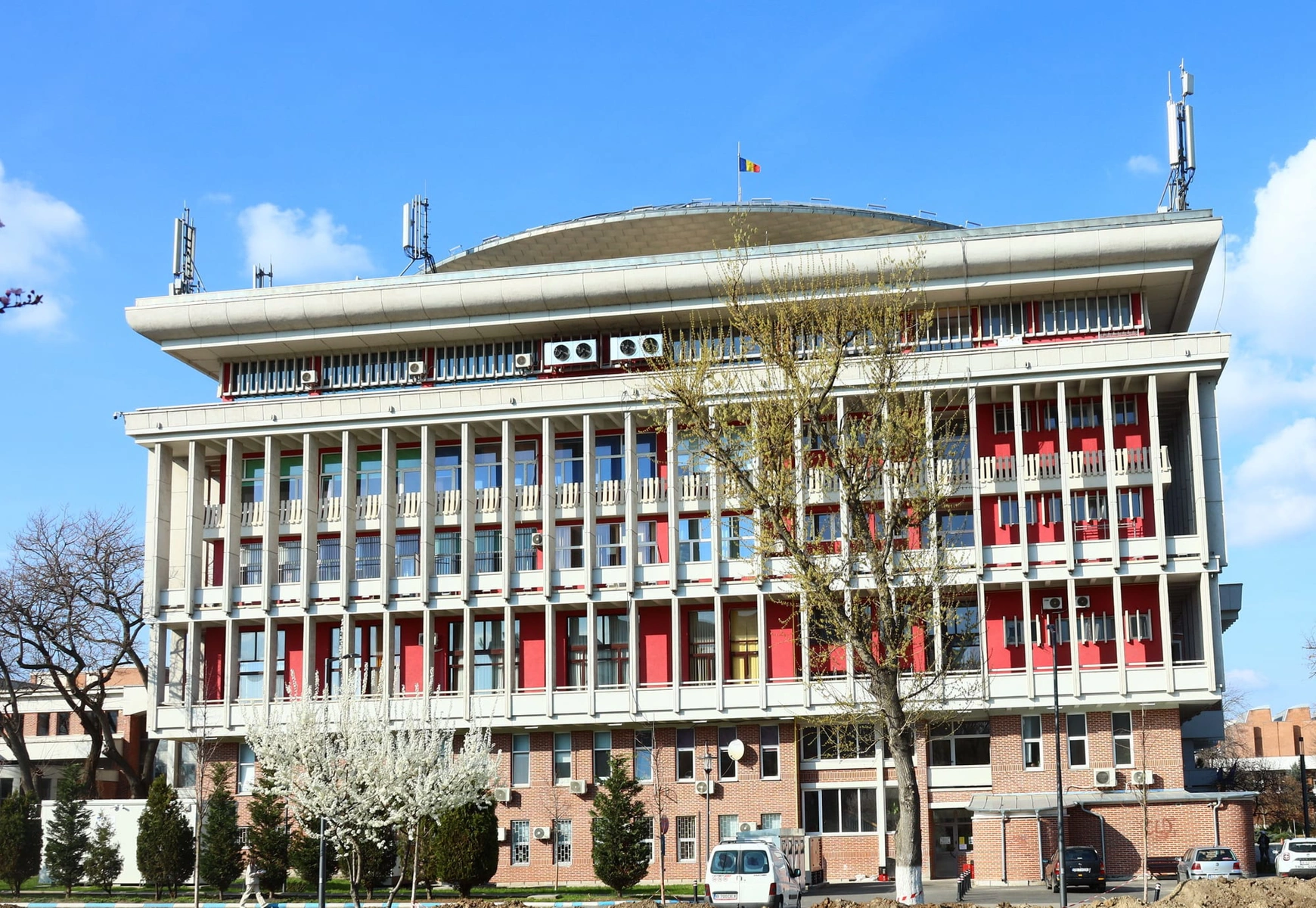
The real prize of the national championship was the European stage: the three SUMO and Line Follower winners formed Georgia’s team for RoboChallenge 2026, under way at POLITEHNICA University of Bucharest from 30 October to 1 November. According to the organisers, more than 1,500 competitors from 34 countries and over 1,300 robots are there this year, and it is the first time a Georgian national team has taken part.
The team’s main supporters are Tegeta Robotics and the University of Georgia, with Ialonix, Arte, EEC Georgia and Tbilisi Digital School as supporters. The scale, categories and numbers of the championship: RoboChallenge 2026: Team Georgia at Europe’s Largest Robotics Event. How to help the team: here.
What do you learn by building a robot like this?
Building a sumo robot or a line follower teaches almost every foundation of robotics at once: electronics and Ohm’s law, programming an Arduino, working with sensors and motors, soldering, designing a chassis and, above all, testing: why does something that worked yesterday not work today?
Building your first robot? Start with our guides: My First Robot, how to build a SUMO robot, SUMO competitions for beginners and building a line follower step by step.
Frequently asked questions
Who won the Georgian Robotics Championship in 2026?
RageByte won Mega Sumo (Dachi Nazrishvili, Eto Chakhvashvili, Misho Kalandarishvili, Nini Gotsadze), Kokadama won Mini Sumo (Konstantine Kvaratskhelia, Kakhaber Kvaratskhelia, Davit Kvaratskhelia, Maia Tsulaia) and Kavtazi won Line Follower (Rati Gogichashvili, Nino Meshveliani).
Where and when was Georgia’s STEAM and Robotics Championship held?
On 20 June 2026 at Radio City | District 4 in Tbilisi. It was organised by the Georgian Robotics Association (GRA) together with its partners.
Who can take part in the Georgian Robotics Championship?
Under the 2026 rules, anyone aged 14 or over, including school teams. Teams have 2–5 members and the robot must be fully autonomous. Rules and registration for future competitions are published on our competitions page.
What are Mega Sumo, Mini Sumo and Line Follower?
They are competitions for autonomous robots. In Mega Sumo and Mini Sumo two robots try to push each other out of a ring (Mega up to 3 kg, Mini up to 0.5 kg). In Line Follower the robot follows a black line and the fastest run wins.
What is the Georgian Robotics Association (GRA)?
A non-profit organisation that develops robotics and STEAM education in Georgia. We have run school competitions since 2022, organised ROBO BATTLE in 2025 and have been a member of the International Federation of Robotics (IFR) since May 2026. Our next event, ROBO BATTLE 2026, runs on 21–28 November.
Next step
Congratulations to RageByte, Kokadama and Kavtazi, and good luck in Bucharest! If you would like to bring your own robot to the next championship, keep an eye on our competitions page. Our next big event, ROBO BATTLE 2026, runs on 21–28 November: a guide for teams and spectators. We will share the team’s results on our Facebook page.
Sources
- Georgia STEAM & Robotics Championship 2026 Successfully Concludes
- Georgian Robotics Championship 2026: SUMO and Line Follower
- Georgian Robotics Association 2022–2026: Our Championships Year by Year
- Team Georgia at RoboChallenge 2026: How You Can Help
- About ROBOCHALLENGE 2026, RoboChallenge
- Cover photo: Trsumo, CC BY-SA 4.0, Wikimedia Commons. Team cards: Georgian Robotics Association.